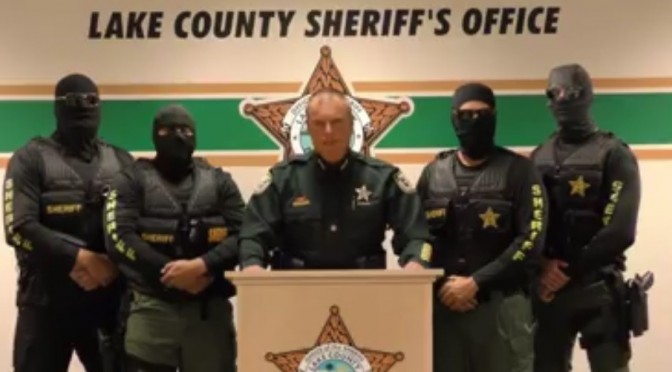
A viral Facebook video posted by the Lake County Sheriff’s Department in Florida features the sheriff surrounded by four masked officers, their eyes hidden behind sunglasses, their torsos protected by bullet-proof vests, wearing the olive green pants of the military — not the blue of law enforcement. Many on social media have pointed out the similarities to ISIS videos, which usually show a row of masked militants issuing extreme threats to enemies. They look like some sort of para-military hit squad, and that's what Sheriff Peyton Grinnell promises they will be.
"To the dealers that are pushing this poison, I have a message for you," the sheriff warns. "We're coming for you. As a matter of fact, our undercover agents have already bought heroin from many of you… To the dealers, I say: Enjoy looking over your shoulder, constantly wondering if today is the day we come for you. Enjoy trying to sleep tonight as you wonder if tonight's the night our SWAT team blows your door off its hinges."
The sheriff's message presumably was designed to be reassuring for the good citizens of Lake County, but the sheriff's promise of increased para-militarized, high-intensity, middle-of-the-night drug raids is anything but, given the record of SWAT raid errors over the years.There's no shortage of news stories about police targeting the wrong house often with disastrous results.
In the Trump era, the fear that Sheriff Grinnell actions might be the first step in a new war on black people has to be considered. The election of President Trump has emboldened racist to commit overt acts. Recently a woman was denied an Airbnb rental and was specifically told it was because of her race. When the renter said she would report the racist action to Airbnb officials, the host replied: “It’s why we have Trump.”
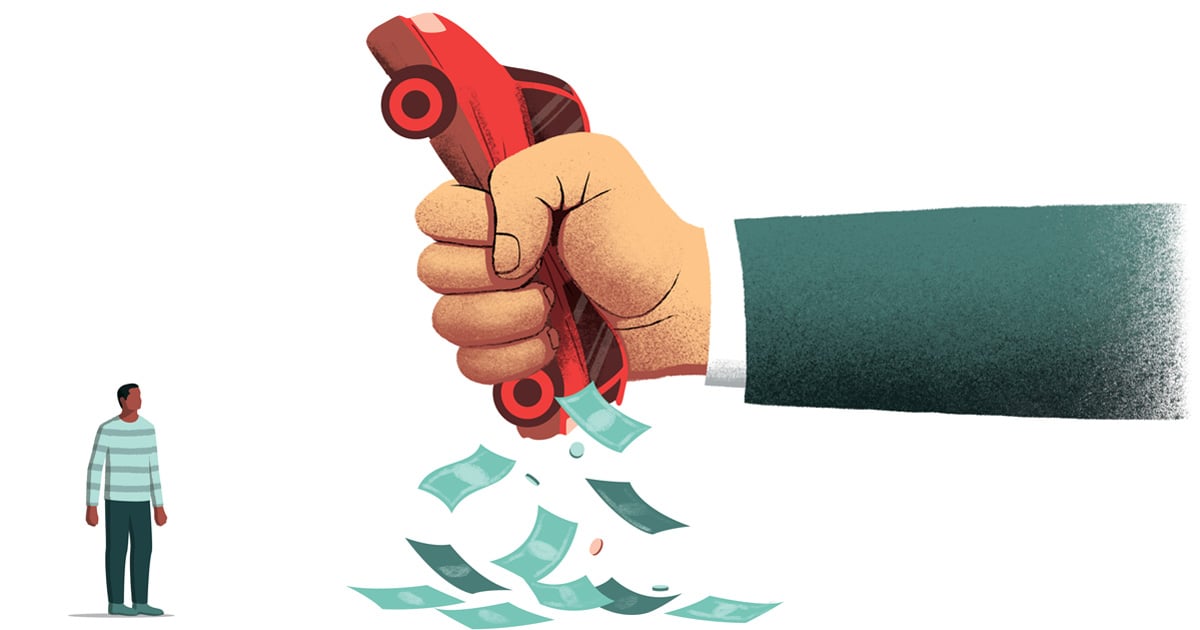
An industry representative disputed findings that many disparities in auto insurance prices between minority and white neighborhoods are wider than differences in risk can explain. His analysis is flawed.
Earlier this week, ProPublica published an investigation with Consumer Reports in which they found that many minority neighborhoods pay higher car insurance premiums than white areas with the same risk. Their findings were based on analysis of insurance premiums and payouts in California, Illinois, Texas, and Missouri. They found insurers such as Allstate, Geico, and Liberty Mutual were charging premiums that were as much as 30 percent higher in zip codes where most residents are minorities than in whiter neighborhoods with similar accident costs. How to buy auto insurance.
In 2015, Consumer Reports published an article, "Car Insurance Can Cost More in African American Communities," that reached similar conclusions and reported that on average, premium rate quotes for its example driver were 70 percent higher in predominantly African American communities than in communities that are mostly white.
An industry representative disputed ProPublica's findings that many disparities in auto insurance prices between minority and white neighborhoods are wider than differences in risk can explain. His analysis is flawed. (Here are details on how they did the analysis.)
An industry trade group, the Insurance Information Institute, responded in the Insurance Journal. The piece, by James Lynch, vice president of research and information services, called ProPublic's article “inaccurate, unfair, and irresponsible.” We disagree. As they typically do with their reporting, ProPublica contacted the industry well ahead of publication and gave it an opportunity to review their data and methodology and respond to our findings.
Here is the response ProPublic and Consumer Reports sent to the Insurance Journal.
While we appreciate that Mr. Lynch and the industry may disagree with our findings and conclusions, we want to correct for readers several errors he made in describing our work. In fact, we released a detailed methodology of our study, primarily to be as transparent and forthright as possible about what we did and did not do, and about the limitations of our analysis.
Mr. Lynch writes that we concluded that “auto insurers charge unfairly high rates to people in minority and low-income communities.” In fact, we found that the disparities were not limited to low-income communities and persist even in affluent minority neighborhoods.
Mr. Lynch writes that we made a mistake by “comparing the losses of all drivers within a ZIP code to the premium charged to a single person.” This assertion does not properly characterize what we did. We compared the average premium in minority zip codes to the average premium in neighborhoods with similar accident costs and a higher proportion of white residents.
Mr. Lynch writes that insurance companies do not set rates based on race or income. Our article does not say that they do. However, as our article pointed out, companies can use such criteria as credit score and occupation, which have been shown to result in higher prices for minorities.
Mr. Lynch writes that we did not address “how auto insurers priced policies where data about the policyholders and a ZIP code’s loss costs was thin.” In fact, we analyzed in detail California’s system of allowing insurers to set rates for sparsely populated rural areas by considering risk in contiguous zip codes.
Mr. Lynch writes that we do not consider that “an auto insurer’s individual loss costs … could vary from the statewide average.” In fact, we acknowledged this point in our article as a potential limitation of our study, while noting that the internal data of one insurance company, Nationwide, showed a greater disparity than the statewide average.
Mr. Lynch also implies we only applied our analysis to a 30-year-old driver. As we acknowledged in our methodology, we could not take every variable into account. We did repeat our analysis for more than 40 driver profiles that differed by age, gender, number of drivers and number of cars. When we ran the numbers, we found consistent results.
Our methodology was developed over more than a year and reviewed by a variety of independent experts in the field (including academics, statisticians and former regulators), whose feedback we incorporated. We were transparent with the Insurance Information Institute and with the firm the trade group hired, providing all our data and even our code to ensure they could fairly respond.
We would welcome the same transparency in return. While the industry criticizes ProPublica and Consumer Reports for not using company-specific data, such as individual insurers’ losses in each zip code, it does not make this information available. If the industry would release it, we would welcome the opportunity to take a look and continue the conversation.
Republished with edits under license from ProPublica
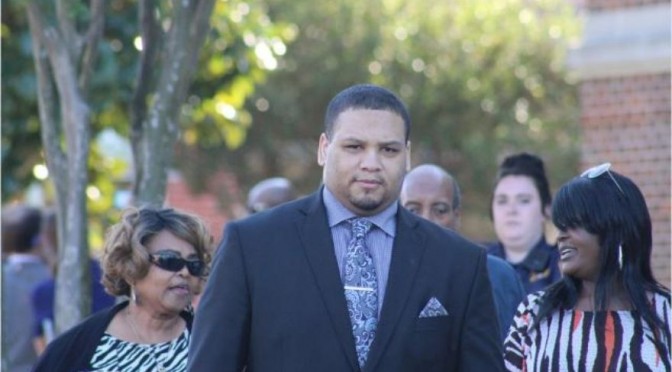
Three days after the incident, a grand jury indicted Derrick Stafford, then 32 and Norris Greenhouse Jr., then 23 with second-degree murder and attempted second-degree murder. Both officers are black.
Officers Norris Greenhouse Jr., left, and Derrick Stafford
On November 3, 2015, Christopher Few, a 25-year-old white man, lead police on a 2-mile chase in Marksville, LA after officers attempted to make a traffic stop. At some point during the chase, officers Derrick Stafford and Norris Greenhouse Jr. called for backup, and two other officers responded
Christopher Few
The chase ended when Few hit a dead-end at the corner of Martin Luther King Drive and Taensas Street. Shots were fired by officers Stafford and Greenhouse who didn't know that Few had his six-year-old son in the vehicle with him. Both Few and his son, Jeremy Mardis, were hit. Mardis died at the scene, Few was hospitalized and has since recovered.
Jeremy Mardis
A jury convicted Derrick Stafford on March 24, 2017, of manslaughter and on March 31, 2017, the judge sentenced Stafford to 40 years. Norris Greenhouse will be tried separately in June.
Stafford and Greenhouse shot a total of 18 bullets into the vehicle and some have mentioned the number of bullets fired demonstrates the cops intended to kill. However, when police officers fired 137 bullets, killing Timothy Russell and Malissa Williams, unarmed black men; the judge acquitted Michael Brelo, the cop who jumped on the hood of their car shooting 15 times through the windshield.
Body cam video from Kenneth Purnell, one of the officers who did not fire his gun, captured the moment that shots were fired. Stafford and Greenhouse over reacted and carelessly cause the child's death. There was no effort by the Black community to start GoFundMe campaigns to support these cops. Had this been white cops, a black father, and son, the cops would have been put on paid administrative leave while a lengthy investigation was conducted. Most likely, it would have taken protest to bring charges, and the white officers most likely would be acquitted since the officers "reasonably feared for their lives" under the circumstance.
Local police officials and prosecutors quickly determined and announced that the video made it clear that charges needed to be filed. There was no discussion about what the video doesn't show or what happened immediately before the cops fired. I suspect a very different narrative would have been told it the cops were white and the father and son black. We would have heard how the father should have complied and stopped his vehicle. We would have heard how the father's actions were responsible for his son's death. The father might even have been charged with reckless endangerment of a child. The father would have been vilified and every negative detail about his life broadcast. There would have been vast public support for the cops who place their lives on the line every day and a GoFundMe account would have been setup for their legal fees.
The white kid's life mattered as it should, but black kid's lives should matter too. How many times have we seen a video of the actual shooting of black men when it was obvious they were not armed. We've even seen a man choked to death on video while complaining "I can't breathe", with no charges against the officers. This is the sort of obvious disparity that created the Black Lives Matter movement and sparked multiple protests around the country when the victim is black. The white community didn't need to protest for action to be taken against the black cops.
Few acknowledged drinking at a bar with his then-girlfriend shortly before the shooting but said he hadn't taken any drugs that day. Few and his fiancee Megan Dixon had an argument at a bar that evening and drove away in separate vehicles. Dixon said she saw Few pass her, followed by a marked police car with two officers. Dixon said that the police pursuit of Few may have been prompted by his running a red light or by the officers seeing an altercation she had with Few at a traffic light when he approached her car and they had words. One police vehicle reportedly received damage caused by Few reversing into it.
Killing of Terence Crutcher
Ironically, over the same weekend that Stafford was convicted of manslaughter, 60 Minutes aired "Shots Fired," about the killing of Terence Crutcher, an unarmed black man shot and killed while holding his hands up. Betty Shelby, the white female Tulsa police officer that fatally shot Crutcher, was interviewed.
A white male cop was nearby when Crutcher was shot and two additional officers were in a helicopter hoovering above, however, Shelby claimed she feared for her safety when she shot Crutcher. Even the cops in the helicopter seemed surprised Crutcher was shot rather than tased. The video below was taken from the helicopter's camera.
Shelby was placed on paid administrative leave and charged with manslaughter six days later while the investigation continued. During the 60 Minutes interview, Shelby blamed Crutcher for his own death. She said if he had only complied, he would still be alive. An online fundraiser was held for officer Shelby which included a donation from one of the officers who was named by the state as a witness.
Just as it was obvious that the black officers in Marksville overreacted, it is equally obvious that the white officer in Tulsa overreacted. We don't believe officer Shelby started her day with the intention of killing a black man, but we do believe that the fact that he was black created a bias that made her believe he was more dangerous than was reasonable.
Mr. Crutcher isn't alive to give his side of the story, but we can guess what it might have been. After seeing too many videos of unarmed black men being shot and killed, Crutcher didn't want to be one of them. Therefore, he put his hands up, walked slowly to indicate he was not a threat and put his hands on top of his vehicle, however, Crutcher was shot, just like another unarmed black man laying the ground with his hands up. Even Donald Trump had to admit that Shelby's shooting of Crutcher was not justified after viewing the video. If Shelby gets convicted, you can be certain it wont be anywhere near 40 years.
This double standard can not be allowed to stand. When justice is unbalanced, we need to take action both politically and economically. We need to stop supporting political candidates who do not work on behalf of our best interest and stop spending our money with companies who do not speak out for us.
If you don't demand your rights, don't be surprised when they are denied. If you accept being treated as a second-class citizen, why would anyone even consider upgrading you to first class?
The black community must also stop giving greater importance to the cultures and traditions others. If you didn't celebrate MLK day or Black History month by educating yourself or your children but you wore green on St. Patrick's Day, you're disrespecting yourself and your community. When you acknowledge Cinco de Mayo, but ignore Juneteenth, you dishonor your ancestor's suffering. How many people in the black community even know what Kwanzaa really is?
By all means, wear your kiss me I'm Irish button and drink Mexican beer, but show just as much pride in your own traditions and customs. When you don't respect your own custom and traditions, why should others? When a white life is lost, don't allow yourself to be drawn into the media hype that black lives that were lost were not as important and don't deserve as much attention.
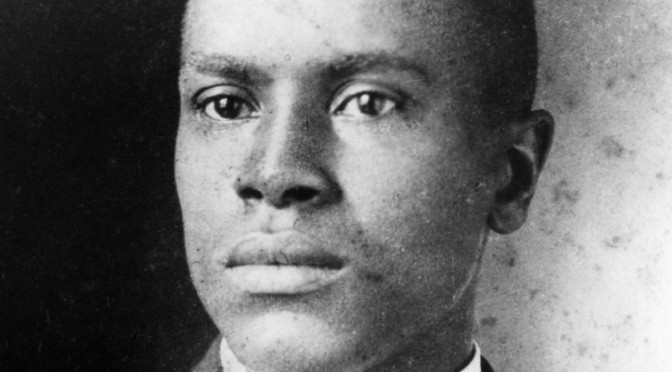
The first African-American candidate nominated by a political party to run for President of the United States, George Edwin Taylor, had been both a republican and democrat. Taylor belonged to a group whose motto was “Race first; then party.” As a group of people, African-Americans politically have become too predictable and are therefore taken for granted.
The three major black democratic candidates for mayor of St. Louis received more than 64% of the total votes cast. Our next mayor easily could have been black. The three black candidates that split the black vote knew that black voters are so predictable that they would not lose their support, even if they collectively cost the black community the mayor's office.
There is still one a black candidate in the mayor's race. Andrew Jones won the republican primary and will be on the ballot in April. Jones wants to debate Krewson and I want to see that debate. Before this election, I was not familiar with Krewson. Krewson only received 5% of the black vote during the primary election.The fact that she is endorsed by both Slay and the St. Louis Police Union, previously headed by Jeff Roorda, does not make me very comfortable.
Jeffrey Roorda was a Democratic member of the Missouri House of Representatives and has worked in law enforcement for seventeen years. He was a police officer in Arnold, Missouri until 2001, when he was fired for making false statements and filing false reports. Later, he became chief of police in Kimmswick, MO. He was the executive director and a business manager of the St. Louis Police Officers Association and is currently a city police union representative.
In St. Louis, some democrats are closet republicans. Republicans understand it's almost impossible for a republican candidate to win, so many republicans disguise themselves as a democrat to win. The democrats at one time were known as the party of the Ku Klux Klan who were described as the military arm of the Democratic Party and are attributed with helping white Democrats regain control of state legislatures throughout the South after the Civil War.
Malcolm X in his "Ballot or the Bullet" speech, explained how dangerous it was for Black folks to throw all their support behind a single political party.
Blacks and the Republican Party
"Heroes of the colored race" Print shows head-and-shoulders portraits of Frederick Douglass, former Republican Senators Blanche Kelso Bruce, and Hiram Rhoades Revels surrounded by scenes of African American life and portraits of Jno. R. Lynch, Abraham Lincoln, James A. Garfield, Ulysses S. Grant, Joseph H. Rainey, Charles E. Nash, John Brown, and Robert Smalls. 1881
Blacks were overwhelmingly republicans until Franklin D. Roosevelt's presidency during the Great Depression. Ironically, FDR's new deal legislation excluded most blacks from benefits, because of a deal made with Southern Democrats. As late as 1960 a third of all African-Americans were still republican.
"First Colored Senator and Representatives in the 41st and 42nd Congress of the United States." (Left to right) Senator Hiram Revels of Mississippi, Representatives Benjamin Turner of Alabama, Robert DeLarge of South Carolina, Josiah Walls of Florida, Jefferson Long of Georgia, Joseph Rainey and Robert B. Elliot of South Carolina.
The Republican party began as an anti-slavery party opposed to the Kansas–Nebraska Act, which opened Kansas and Nebraska Territory to slavery and future admission as slave states, thus implicitly repealing the prohibition on slavery in territory north of 36° 30′ latitude, which had been part of the Missouri Compromise.
Abraham Lincoln became the first Republican President and Southern states began seceding from the union resulting in the Civil War. Since President Lincoln was credited with freeing the slaves and democrats were associated with slavery, Blacks naturally supported the Republican Party.
George Wallace Effect
In 1952, George Wallace became the Circuit Judge of the Third Judicial Circuit in Alabama. Wallace became known as "the fighting little judge," a nod to his past boxing association. He gained a reputation for fairness regardless of the race of the plaintiff. It was common practice at the time for judges in the area to refer to black lawyers by their first names, while their white colleagues were addressed formally as "Mister". A Black lawyer, J. L. Chestnut said that,
"Judge George Wallace was the most liberal judge that I had ever practiced law in front of. He was the first judge in Alabama to call me 'Mister' in a courtroom."
In 1958, George Wallace ran against John Patterson in his first gubernatorial race. In that Alabama election, Wallace refused to make race an issue, and he declined the endorsement of the Ku Klux Klan. This move won Wallace the support of the NAACP. Patterson, on the other hand, embraced Klan support, and he trounced Wallace.
Wallace reportedly said after the campaign,
"I was out-niggered by John Patterson. And I'll tell you here and now, I will never be out-niggered again." … "I tried to talk about good roads and good schools and all these things that have been part of my career, and nobody listened. And then I began talking about niggers, and they stomped the floor."
In 1962 Wallace, having realized the power of race as a political tool, ran for governor again—this time as a proponent of segregation. He won by a landslide.
Civil rights protest made many white voters unsympathetic to the movement. After Republicans notice how popular democratic Governor George Wallace's racist rants were all over the country, including the North, some republicans began incorporating those same racist elements into their campaign.
Racist white democrats unhappy with Kennedy, switched to the republican party. Because of Kennedy's perceived support of black issues and Johnson pushing through the Civil Rights and Voting Rights Acts, Black voters became almost exclusively democrat.
In 1968, when George Wallace maintained that there wasn't a dime's worth of difference between the two parties, he may not have known how right he was or why.
The republicans, using the democratic play book, started injecting racist code words rather than overt racist words into their campaigns. John Ehrlichman, President Richard Nixon's domestic policy advisor, made the following statements about the 1968 presidential election,
"The Nixon campaign in 1968, and the Nixon White House after that, had two enemies, the anti-war left and black people."…"We knew we couldn’t make it illegal to be either against the war or black, but by getting the public to associate the hippies with marijuana and blacks with heroin, and then criminalizing both heavily, we could disrupt those communities. We could arrest their leaders, raid their homes, break up their meetings, and vilify them night after night on the evening news."
Ronald Reagan during his campaign told stories of Cadillac-driving "welfare queens" and "strapping young bucks" buying T-bone steaks with food stamps. George Bush used the infamous Willie Horton ads during his campaign and of course most recently Donald Trump reverted back to overt racist language to win. See the book, "Dog Whistle Politics" for additional information racism used to win elections.
Republicans control all the major Missouri state-level elected offices and the legislature is Republican controlled. A Black Republican mayor under these conditions stands a better chance of working with and getting concessions from the Republican-dominated state government. The republican legislature and governor might even pay closer attention to issues concerning black voters since they would want them to continue voting for other republican candidates.
Use common sense, if you know a particular group of voters will never vote for you, how seriously would you look out for their interests? The opposite is also true. When you know you have the black vote regardless, politicians can make deals without worrying much about the issues affecting the black community. Electing a republican mayor would send a chilling message to democrats that the black vote should no longer be taken for granted.
I am 51 years old and have voted for democrats all of my life. Things have actually gotten worse, it's time to consider a change. In my 51 years, a white person has sat in the Mayor's office except for eight years when Freeman Bosley Jr. and then Clarence Harmon were mayor. I saw changes and real attempts at change in North St. Louis when a Black mayor was in office.
A black mayor is more likely to have friends and relatives in North St. Louis and may care a little more about the issues that affect the black community. However, I don't want to vote for Andrew Jones simply because he's black any more than I want to vote for Krewson just because she's democrat. I want to see a debate and a real discussion about the issues.
"It's not a matter of just having a representative … that looks like you, they've got to come from the community, know the issues of the community, and then it's folks in the community that got to remind them every day that we pay your bills and where watching every single day to ensure that the platform on which we elected you on is followed and defend you when those people who seek to calibrate the system and right the system as it's been built seek to come after your for that office"
Had one of the three major black democratic candidates gotten elected, I would have been voting for a democrat this election. I am extremely disappointed with their lack of unity and vision. Those candidates were divided and conquered. Unfortunately, they couldn't unite and work together so that the black community could support and elect a black democratic candidate in the general election. If they can't work among themselves, how would they ever be able to work with a republican controlled governor and legislature?
Amazingly, St. Louis media including the St. Louis Post-Dispatch, St. Louis television stations and even the St. Louis American, a Black St. Louis' Newspaper, appear to ignore the fact that a black man is the republican candidate for mayor. Bruce Franks received more press coverage about being a write-in candidate than Andrew Jones received as an actual major party candidate. It's almost as if the press in St. Louis doesn't want to alert the black community that a black republican is in the race for mayor. Andy Karandzieff of Crown Candy received more press coverage for being a republican primary candidate than Jones has received as the republican candidate for mayor.
St. Louis, which has been dominated by democrats all of my life, has one of the highest homicide rates in the country. The entire North Side was abandoned and left to decay and St. Louis City a reputation for being one of the most racist and segregated cities in the country. How much worse off could St. Louis be under a Republican mayor?
Krewson should at least debate Jones so we can better decide if the white democratic candidate or the Black Republican candidate is the better choice. If Krewson refuses to debate Jones, take that into consideration when you vote.
Andrew Jones won the March 7th, Republican primary race for mayor and is the only Black candidate still in the running for mayor.
The five black democratic candidates received a total of 67.5% of the vote. Since St. Louis is in one the most racially polarized cities in the country, having a Black republican candidate in the general election might be a game changer.
Before Andrew Jones' victory in the republican primary, I had assumed I would be voting for Larry Rice during the general election, but I am now taking a closer look at Andrew Jones. There's even indication by comments made by Jones concerning the homeless that Jones would be more willing to work together with Larry Rice than the current administration or Krewson.
Who Is Andrew Jones
You may be wondering just who is Andrew Jones? I had the same question, so here's the result of my research.
Andrew Jones is an Executive Vice President of Business Development and Marketing at Southwestern Electric, which distributes electricity from Collinsville to Effingham, Illinois. Jones was born in Cairo, IL in 1960, raised in East St. Louis and has lived in the City of St. Louis for about 30 years, currently in the Botanical Heights neighborhood.
Andrew Jones earned a BS in economics with a minor in business administration from Lincoln University (Jefferson City, MO), and two graduate degrees; an MA in International Business from Webster University, and an MBA from Washington University's Olin School of Business.
Below is a video of a February 22, 2017, primary election event held at the Sheldon Concert Hall where the St. Louis mayoral candidates participated and responded to questions.
Will Black voters support the White democratic primary winner who only received about 5% of the Black vote during the primary or will they break ranks and support the Black republican candidate.
I consider myself independent, however, I have voted most often for democratic candidates. Unfortunately, there haven't been many republican candidates that genuinely seemed to have the best interest of the black community at heart. We need a change in St. Louis and a Black republican mayor would certainly bring change. The one thing I know for certain, it couldn't be much worse than it is now, and St. Louis has had democratic leadership I believe for my entire life.
The fact that Krewson was endorsed by Slay and the Police Union doesn't inspire faith that things will be any different under a Krewson administration. A republican mayor might even be able to gain additional favor from the republican governor and legislature and work as partners rather than adversaries.
For more information about Andrew Jones' views, check out Building St. Louis News which published a series of questions and answers concerning a range of St. Louis issues or visit the Andrew Jones for Mayor website
The three major black democratic mayoral candidates, Tishaura Jones, Lewis Reed and Antonio French, threw away the best chance St. Louis had of having full black leadership in power positions including control of the police department. The chief of police reports directly to the director of public safety and the director of public safety reports directly to the mayor. Everyone but the candidates themselves seemed to understand that they were splitting the vote.
How is it possible that three intelligent, seasoned politicians didn't understand they would split the black vote so severely that none of them would win? The vote was split even in my own household, which has three registered voters. Although, Tishaura Jones came surprisingly close to Krewson, she still needlessly lost the primary.
Black St. Louis voters turned out in strong support only to be disappointed because our elected officials couldn't work together. Our elected officials need to be smarter than this; the black community has too much to lose. This loss feels like a betrayal. Instead of working together, these candidates created a divide and conquer scenario, and allowed a lesser-known candidate to beat them all.
These candidates demonstrated they were thinking only about their own political future and not what was best for St. Louis' Black Community or the City of St. Louis in General. Jamilah Nasheed who had officially declared she was running for Mayor, was the only viable black candidate that demonstrated a team spirit and common sense when she withdrew from the race.
The two white democratic candidates had a combined 32.5% of the vote. The three major black candidates had a combined 64.5% of the vote, with Tishaura Jones receiving 30.4. The second and third place black candidates, Reed and French, had a combined 34.1% of the vote, more than the combined totals of the two white candidates. It's almost a statistical certainty that Jones, Reed or French running without the other two major black candidates opposing them would have won.
The election results are below as reported by the St. Louis Post-Dispatch.
St. Louis Mayor (Democratic)
222 of 222 precincts reporting (100.0%)
Name
Votes
Pct.
Jeffrey L. Boyd
1,429
2.7%
Antonio French
8,460
15.8%
William (Bill) Haas
257
0.5%
Tishaura O. Jones
16,222
30.4%
Lyda Krewson
17,110
32.0%
Jimmie Matthews
145
0.3%
Lewis Reed
9,775
18.3%
Andrew Jones, the winner of the republican primary, is the only black candidate still in the race for mayor.
Oscar Devereaux Micheaux (January 2, 1884 – March 25, 1951) was an African American author, film director and independent producer of more than 44 films. Although the short-lived Micheaux Book & Film Company produced some films, he is regarded as the first major African-American feature filmmaker, the most successful African-American filmmaker of the first half of the 20th century and the most prominent producer of race films.
Race films, mostly produced between 1915 and 1950 consisted of films produced for an all-black audience and featuring black casts. Micheaux produced both silent films and sound films when the industry changed to incorporate speaking actors.
Micheaux was born on a farm in Metropolis, Illinois on January 2, 1884. He was the fifth child born to Calvin S. and Belle Micheaux, who had a total of 13 children. In his later years, Micheaux added an “e” to his last name. His father was born a slave in Kentucky. Because of its surname, his father's family appears to have been associated with French-descended settlers. French Huguenot refugees had settled in Virginia in 1700; their descendants took slaves west when they migrated into Kentucky after the American Revolutionary War.
In his later years, Micheaux wrote about the social oppression he experienced as a young boy. To give their children education, his parents relocated to the city for better schooling. Micheaux attended a well-established school for several years before the family eventually ran into money troubles and were forced to relocate to the farm. Unhappy, Micheaux became rebellious and discontented. His struggles caused internal problems within his family. His father was not happy with him and sent him away to do marketing within the city. Micheaux found pleasure in this job because he was able to speak to many new people and learned many social skills that he would later reflect within his films.
When Micheaux was 17 years old, he moved to Chicago, Illinois to live with his older brother, then working as a waiter. Micheaux became dissatisfied with what he viewed as his brother’s way of living “the good life.” He rented his own place and found a job in the stockyards, which he found difficult. He worked many different jobs, moving from the stockyards to the steel mills.
After being “swindled out of two dollars” by an employment agency, Micheaux decided to become his own boss. His first business was a shoeshine stand, which he set up at a white suburban barbershop, away from Chicago competition. He learned the basic strategies of business and started to save money. He became a Pullman porter on the major railroads, at that time considered prestigious employment for African Americans because it was relatively stable, well-paid, and secure, and it enabled travel and interaction with new people. This job was an informal education for Micheaux. He profited financially, and also gained contacts and knowledge about the world through traveling as well as a greater understanding for business. When he left the position, he had seen much of the United States, had a couple of thousand dollars saved in his bank account, and had made a number of connections with wealthy white people who helped his future endeavors.
Micheaux moved to Dallas, South Dakota, where he bought land and worked as a homesteader. This experience inspired his first novels and films. His neighbors on the frontier were all white. "Some recall that [Micheaux] rarely sat at a table with his white neighbors." Micheaux’s years as a homesteader allowed him to learn more about human relations and farming. While farming, Micheaux wrote articles and submitted them to the press. The Chicago Defender published one of his earliest articles.
Oscar Micheaux's South Dakota Homestead.
In South Dakota, Micheaux married Orlean McCracken. Her family proved to be complex and burdensome for Micheaux. Unhappy with their living arrangements, Orlean felt that Micheaux did not pay enough attention to her. She gave birth while he was away on business. She was reported to have emptied their bank accounts and fled. Orlean’s father sold Micheaux's property and took the money from the sale. After his return, Micheaux tried unsuccessfully to get Orlean and his property back.
Micheaux decided to concentrate on writing and, eventually, filmmaking, a new industry. He wrote seven novels. In 1913, 1,000 copies of his first book, The Conquest: The Story of a Negro Homesteader, were printed. He published the book anonymously, for unknown reasons. Based on his experiences as a homesteader and the failure of his first marriage, it was largely autobiographical. Although character names have been changed, the protagonist is named Oscar Devereaux. His theme was about African Americans realizing their potential and succeeding in areas where they had not felt they could.
The book outlines the difference between city lifestyles of Negroes and the life he decided to lead as a lone Negro out on the far West as a pioneer. He discusses the culture of doers who want to accomplish and those who see themselves as victims of injustice and hopelessness and who do not want to try to succeed, but instead like to pretend to be successful while living the city lifestyle in poverty.
He had become frustrated with getting members of his race to populate the frontier and make something of themselves, with real work and property investment. He wrote over 100 letters to fellow Negroes in the East beckoning them to come West, and only his older brother eventually came West. One of Micheaux's fundamental beliefs is that hard work and enterprise will make any person rise to respect and prominence no matter his or her race.
Micheaux’s first novel The Conquest was adapted to film and re-titled, The Homesteader. In 1918, his novel The Homesteader, dedicated to Booker T. Washington, attracted the attention of George Johnson, the manager of the Lincoln Motion Picture Company in Los Angeles. After Johnson offered to make The Homesteader into a new feature film, negotiations and paperwork became contentious between Micheaux and him. Micheaux wanted to be directly involved in the adaptation of his book as a movie, but Johnson resisted and never produced the film.
Instead, Micheaux founded the Micheaux Film & Book Company of Sioux City in Chicago; its first project was the production of The Homesteader as a feature film. Micheaux had a major career as a film producer and director: He produced over 40 films, which drew audiences throughout the U.S. as well as internationally.
This film, was met with critical and commercial success. It revolves around a man named Jean Baptiste, called the Homesteader, who falls in love with many white women but resists marrying one out of his loyalty to his race. Baptiste sacrifices love to be a key symbol for his fellow African Americans. He looks for love among his own people and marries an African-American woman. Relations between them deteriorate. Eventually, Baptiste is not allowed to see his wife. She kills her father for keeping them apart and commits suicide. Baptiste is accused of the crime, but is ultimately cleared. An old love helps him through his troubles. After he learns that she is a mulatto and thus part African, they marry. This film deals extensively with race relationships.
Micheaux contacted wealthy white connections from his earlier career as a porter, and sold stock for his company at $75 to $100 a share. Micheaux hired actors and actresses and decided to have the premiere in Chicago. The film and Micheaux received high praise from film critics. One article credited Micheaux with “a historic breakthrough, a creditable, dignified achievement”. Some members of the Chicago clergy criticized the film as libelous. The Homesteader became known as Micheaux’s breakout film; it helped him become widely known as a writer and a filmmaker.
In addition to writing and directing his own films, Micheaux also adapted the works of different writers for his silent pictures. Many of his films were open, blunt and thought-provoking regarding certain racial issues of that time. He once commented, “It is only by presenting those portions of the race portrayed in my pictures, in the light and background of their true state, that we can raise our people to greater heights”. Financial hardships during the Great Depression eventually made it impossible for Micheaux to keep producing films, and he returned to writing.
Micheaux’s second silent film was Within Our Gates, produced in 1920. Although sometimes considered his response to the film Birth of a Nation, Micheaux said that he created it independently as a response to the widespread social instability following World War I.
Within Our Gates revolved around the main character, Sylvia Landry, a mixed-race school teacher. In a flashback, Sylvia is shown growing up as the adopted daughter of a sharecropper. When her father confronts their white landlord over money, a fight ensues. The landlord is shot by another white man, but Sylvia's adoptive father is accused and lynched with her adoptive mother.
Sylvia is almost raped by the landowner’s brother but discovers that he is her biological father. Micheaux always depicts African Americans as being serious and reaching for higher education. Before the flashback scene, we see that Sylvia travels to Boston, seeking funding for her school, which serves black children. They are underserved by the segregated society. On her journey, she is hit by the car of a rich white woman. Learning about Landry's cause, the woman decides to give her school $50,000.
Within the film, Micheaux depicts educated and professional people in black society as light-skinned, representing the elite status of some of the mixed-race people who comprised the majority of African Americans free before the Civil War. Poor people are represented as dark-skinned and with more undiluted African ancestry. Mixed-race people also feature as some of the villains. The film is set within the Jim Crow era. It contrasted the experiences for African Americans who stayed in rural areas and others who had migrated to cities and become urbanized. Micheaux explored the suffering of African Americans in the present day, without explaining how the situation arose in history. Some feared that this film would cause even more unrest within society, and others believed it would open the public’s eyes to the unjust treatment by whites of blacks. Protests against the film continued until the day it was released. Because of its controversial status, the film was banned from some theaters.
Micheaux's 1925 Body and Soul starred Paul Robeson in his motion picture debut.
An escaped prisoner seeks refuge in the predominantly African-American town of Tatesville, Georgia, by passing himself off as the Rt. Reverend Isaiah T. Jenkins. He is joined in town by a fellow criminal, and the pair scheme to swindle the phony reverend's congregation of their offerings. Jenkins falls in love with a young member of his congregation, Isabelle Perkins, even though she is in love with a poor young man named Sylvester, who happens to be Jenkins’ long-estranged twin brother.
Jenkins steals money from Martha Jane, Isabelle's mother and convinces the young woman to take the blame for his crime. She flees to Atlanta and dies just as her mother locates her. Before dying, Isabelle reveals to her mother that Jenkins raped her and that he is the one who took her mother's money. She explains that she did not speak up before because she knew her mother would not believe her.
Returning to Tatesville, Martha Jane confronts Jenkins in front of the congregation. Jenkins flees and during a twilight struggle he kills a man who tries to bring him to justice. The following morning, Martha Jane awakens and realizes the episode with Jenkins was only a dream. She provides Isabelle (who is not dead) and Sylvester with the funds to start a married life together.
Micheaux adapted two works by Charles W. Chesnutt, which he released under their original titles: The Conjure Woman (1926) and The House Behind the Cedars (1927). The latter, which dealt with issues of mixed race and passing, created so much controversy when reviewed by the Film Board of Virginia that he was forced to make cuts to have it shown. He remade this story as a sound film in 1932, releasing it with the title Veiled Aristocrats. The silent version of the film is believed to have been lost.
Ten Minutes to Live is another 1932 Micheaux film. A movie producer offers a nightclub singer a role in his latest film, but all he really wants to do is bed her. She knows, but accepts anyway. Meanwhile, a patron at the club gets a note saying that she'll soon get another note, and that she will be killed ten minutes after that.
Micheaux's films were coined during a time of great change in the African-American community. His films featured contemporary black life. He dealt with racial relationships between blacks and whites, and the challenges for blacks when trying to achieve success in the larger society. Micheaux films were used to oppose and discuss the racial injustice that African Americans received. Topics such as lynching, job discrimination, rape, mob violence, and economic exploitation were depicted in his films. These films also reflect his ideologies and autobiographical experiences. The journalist Richard Gehr said, “Micheaux appears to have only one story to tell, his own, and he tells it repeatedly”.
Micheaux sought to create films that would counter white portrayals of African Americans, which tended to emphasize inferior stereotypes. He created complex characters of different classes. His films questioned the value system of both African American and white communities as well as caused problems with the press and state censors
Oscar Micheaux (center) with an actor and possibly a crew member appearing in an advertisement for the Micheaux Film Corporation.
The critic Lupack described Micheaux as pursuing moderation with his films and creating a “middle-class cinema”. His works were designed to appeal to both middle- and lower-class audiences.
Micheaux said,
“My results…might have been narrow at times, due perhaps to certain limited situations, which I endeavored to portray, but in those limited situations, the truth was the predominate characteristic. It is only by presenting those portions of the race portrayed in my pictures, in the light and background of their true state, that we can raise our people to greater heights. I am too imbued with the spirit of Booker T. Washington to engraft false virtues upon ourselves, to make ourselves that which we are not.”
Micheaux died on March 25, 1951, in Charlotte, North Carolina, of heart failure. He is buried in Great Bend Cemetery in Great Bend, Kansas, the home of his youth. His gravestone reads: "A man ahead of his time".
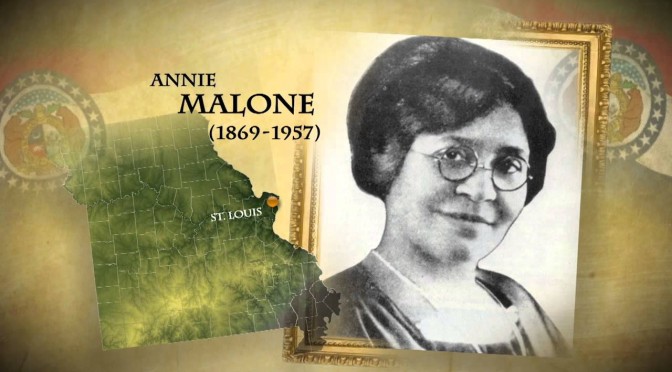
Annie Minerva Turnbo Malone (August 9, 1869 – May 10, 1957) was an American businesswoman, inventor, and philanthropist. In the first three decades of the 20th century, she founded and developed a large and prominent commercial and educational enterprise centered on cosmetics for African-American women.
Annie Minerva Turnbo was born in southern Illinois, the daughter of enslaved Africans Robert and Isabella (Cook) Turnbo. When her father went off to fight for the Union with the 1st Kentucky Cavalry in the Civil War, Isabella took the couple's children and escaped from Kentucky, a neutral border state that maintained slavery. After traveling down the Ohio River, she found refuge in Metropolis, Illinois. There Annie Turnbo was later born, the tenth of eleven children.
Annie Turnbo was born on a farm near Metropolis in Massac County, Illinois. Orphaned at a young age, Annie attended a public school in Metropolis before moving to Peoria to live with her older sister Ada Moody in 1896. There Annie attended high school, taking particular interest in chemistry. However, due to frequent illness, Annie was forced to withdraw from classes.
While out of school, Annie grew so fascinated with hair and hair care that she often practiced hairdressing with her sister. With expertise in both chemistry and hair care, Turnbo began to develop her own hair care products. At the time, many women used goose fat, heavy oils, soap, or bacon grease to straighten their curls, which damaged both scalp and hair.
By the beginning of the 1900s, Turnbo moved with her older siblings to Lovejoy, now known as Brooklyn, Illinois. While experimenting with hair and different hair care products, she developed and manufactured her own line of non-damaging hair straighteners, special oils, and hair-stimulant products for African-American women. She named her new product “Wonderful Hair Grower”. To promote her new product, Turnbo sold the Wonderful Hair Grower in bottles from door-to-door. Her products and sales began to revolutionize hair care methods for all African Americans.
A variety of Poro products available for sale during the companies operations.Price list of select Poro products
In 1902, Turnbo moved to a thriving St. Louis, where she and three hired assistants sold her hair care products from door-to-door. As part of her marketing, she gave away free treatments to attract more customers.
Due to the high demand for her product in St. Louis, Turnbo opened her first shop on 2223 Market Street in 1902. She also launched a wide advertising campaign in the black press, held news conferences, toured many southern states, and recruited many women whom she trained to sell her products.
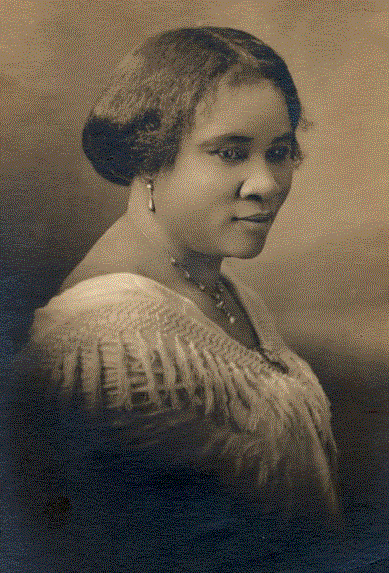
One of her selling agents, Sarah Breedlove Davis (who became known as Madam C. J. Walker when she set up her own business), operated in Denver, Colorado until a disagreement led Walker to leave the company.
Madame C. J. Walker
This development was one of the reasons which led the then Mrs. Pope to copyright her products under the name "Poro" because of what she called fraudulent imitations and to discourage counterfeit versions. Madame C. J. Walker became one of the wealthiest African-American women in the country. Annie Malone was a millionaire before Walker, yet unlike Madame Walker, Malone lived quite modestly, so Walker is often mistakenly credited as the first black female millionaire.
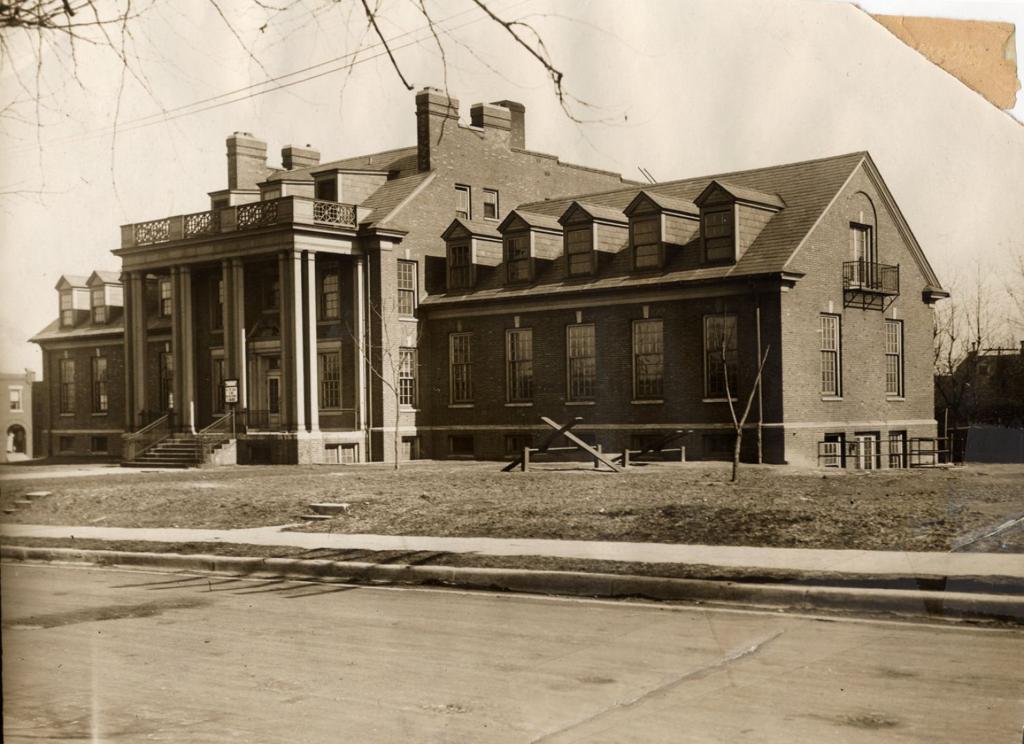
In 1902 she married Nelson Pope; the couple divorced in 1907. Poro was a combination of the married names of Annie Pope and her sister Laura Roberts. Due to the growth in her business, in 1910 Turnbo moved to a larger facility on 3100 Pine Street.
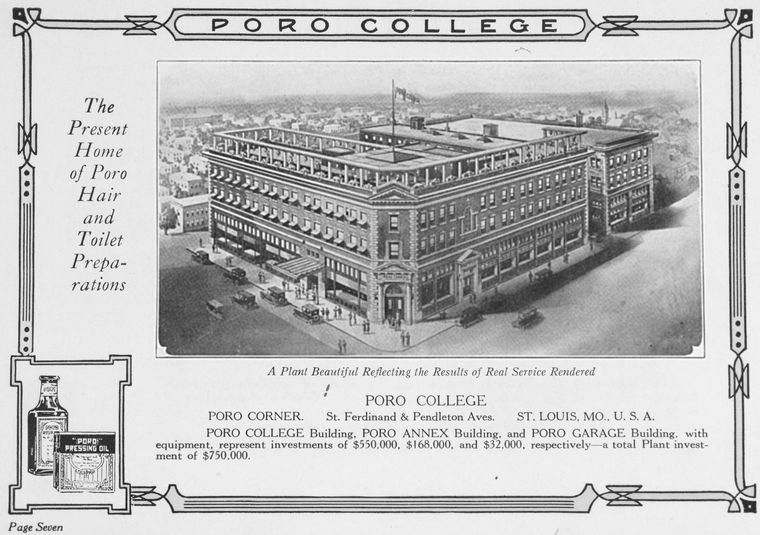
On April 28, 1914, Annie Turnbo married Aaron Eugene Malone, a former teacher, and religious book salesman. Turnbo Malone, by then worth well over a million dollars, built a five-story multipurpose facility.
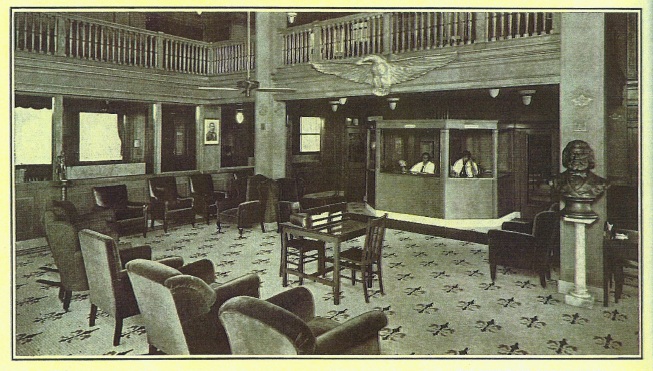
Poro Lobby
In addition to a manufacturing plant, it contained facilities for a beauty college, which she named Poro College.
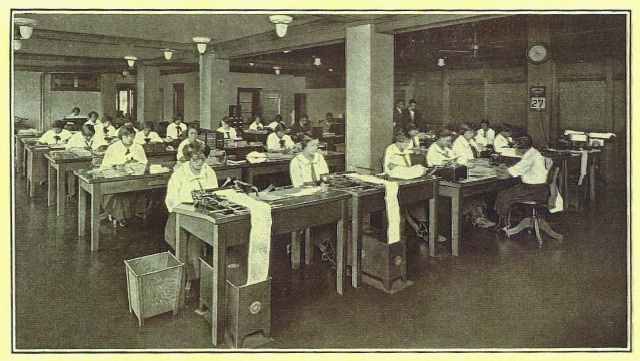
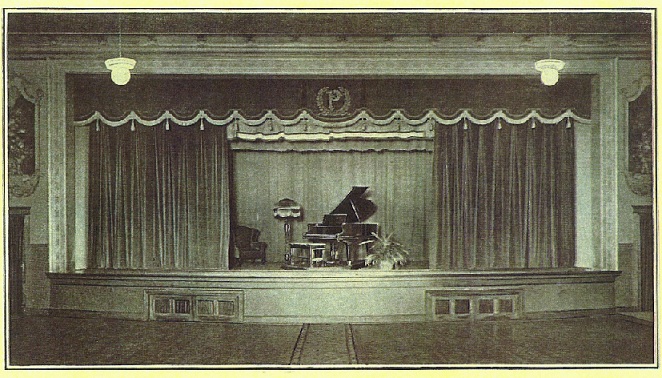
General offices of Poro ProductsPoro College Auditorium
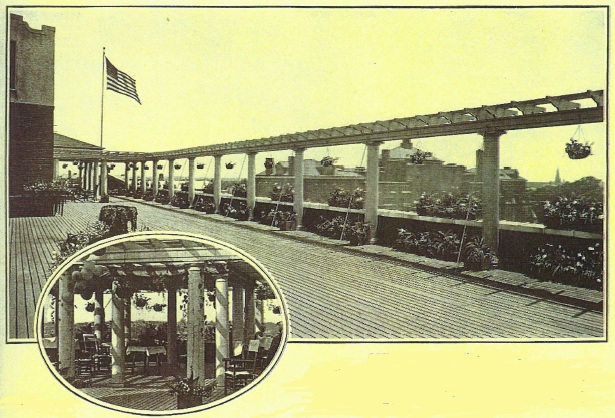
The building included a manufacturing plant, a retail store where Poro products were sold, business offices, a 500-seat auditorium, dining and meeting rooms, a roof garden, dormitory, gymnasium, bakery, and chapel.
Poro rooftop garden
The Poro College building served the African-American community as a center for religious and social functions.
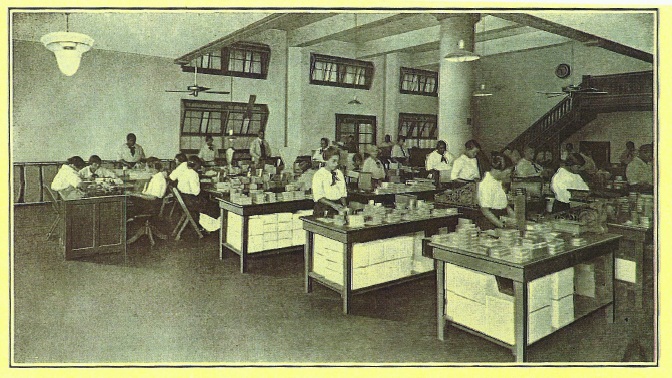
Shipping Department of Poro
The College's curriculum addressed the whole student; students were coached on personal style for work: on walking, talking, and a style of dress designed to maintain a solid persona.
Poro College employed nearly 200 people in St. Louis. Through its school and franchise businesses, the college created jobs for almost 75,000 women in North and South America, Africa and the Philippines.
Vintage photo of graduation class with Annie Malone in the center (back row, with glasses) held at Big Bethel AME Church, Atlanta.Diploma Day at Poro College, 1920
By the 1920s, Annie Turnbo Malone had become a multi-millionaire. In 1924 she paid income tax of nearly $40,000, reportedly the highest in Missouri.
While extremely wealthy, Malone lived modestly, giving thousands of dollars to the local black YMCA and the Howard University College of Medicine in Washington, DC. She also donated money to the St. Louis Colored Orphans Home, where she served as president on the board of directors from 1919 to 1943.
St. Louis Colored Orphans Home, opened in 1922. Annie Malone donated $10,000 for its construction.
With her help, in 1922 the Home bought a facility at 2612 Goode Avenue (the street which was renamed Annie Malone Drive in her honor).
A more modern representation of Annie Malone's Children Home
The Orphans Home is still located in the historic Ville neighborhood. Upgraded and expanded, the facility was renamed in the entrepreneur's honor as the Annie Malone Children and Family Service Center. As well as funding many programs, Malone ensured that her employees, all African American, were paid well and given opportunities for advancement.
Her business thrived until 1927 when her husband filed for divorce. Having served as president of the company, he demanded half of the business' value, based on his claim that his contributions had been integral to its success. The divorce suit forced Poro College into court-ordered receivership. With support from her employees and powerful figures such as Mary McLeod Bethune, she negotiated a settlement of $200,000. This affirmed her as the sole owner of Poro College, and the divorce was granted.
After the divorce, Turnbo Malone moved most of her business to Chicago’s South Parkway, where she bought an entire city block. Other lawsuits followed. In 1937, during the Great Depression, a former employee filed suit, also claiming credit for Poro's success. To raise money for the settlement, Turnbo Malone sold her St. Louis property. Although much reduced in size, her business continued to thrive.
On May 10, 1957, Annie Malone suffered a stroke and died at Chicago's Provident Hospital. Childless, she had bequeathed her business and remaining fortune to her nieces and nephews. At the time of her death, Poro beauty colleges were in operation in more than thirty U.S. cities. Her estate was valued at $100,000.
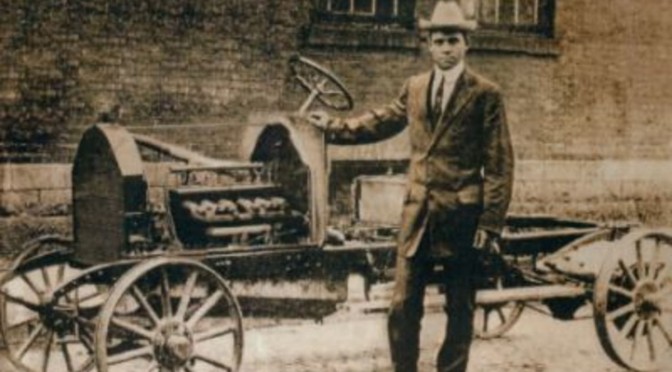
Frederick Douglas Patterson (1871–1932) was an American entrepreneur known for the Greenfield-Patterson automobile of 1915, built in Ohio. He later converted his business to the Greenfield Bus Body Company.
While in college at Ohio State University, he was the first African-American to play on its football team. He returned to Greenfield to join his father in his carriage business, which became C.R. Patterson and Sons.
C.R. Patterson & Son Carriage Ad
The younger man saw opportunity in the new horseless carriages, and converted the company in the early 1900s to manufacture automobiles, making 150 of them.
Development of an automobile began in 1914 and the first Patterson-Greenfield rolled out of the company’s Washington St. facility on Sept. 23, 1915. Priced at $850, the Patterson-Greenfield was offered as a touring or roadster and featured a 30hp Continental 4-cylinder engine, full floating rear axle, cantilever springs, demountable rims, electric starting and lighting and a split windshield for ventilation.
Later he shifted to making buses and trucks and renamed his company as Greenfield Bus Body Company. After Patterson's death in 1932, his son kept the business going through much of the Great Depression, finally closing it in 1939.
1917 Patterson-Greenfield Roadster
Named after the noted abolitionist, Frederick Douglas Patterson was born in 1871 as the youngest of four children of Josephine Utz (aka Outz) and Charles Richard Patterson. He had an older brother Samuel. Their father was an ex-slave who had escaped to Greenfield, Ohio from Virginia shortly before the American Civil War.
Charles Richard Patterson of C.R. Patterson & Sons
After getting established as a blacksmith in town, Charles had married Josephine Utz, a young local white woman. By the time Frederick was born, his father had a successful carriage business with a partner. The Pattersons encouraged the education of their children: Samuel, two daughters, and Frederick.
Just before the Civil War, Charles Patterson left slavery and headed north, bringing blacksmithing skills he learned in Virginia. Not long after settling in, Patterson began working at a carriage company. By 1870 he was a foreman and by 1873, Patterson had gone into business with J.P. Lowe, a white carriage maker.
The State of Ohio’s 1888 Bureau of Labor Statistics Report lists J.P. Lowe & Co., carriages, etc. with a staff of 10. It is believed that Patterson became a partner in the business that was popularly known as Lowe & Patterson, although its legal name remained J.P. Lowe & Co. until 1893 when Patterson bought out Lowe's share in the business and reorganized as C.R. Patterson, Son & Co. to reflect the involvement of Samuel C. Patterson, Charles’ youngest son.
Frederick graduated from the old Greenfield High School in 1888 and went on to Ohio State University. While at the university, he played on the football team in his junior year in 1891, the first African American to do so. He withdrew from college in his senior year before graduating, taking a job as a high school history teacher in Louisville, Kentucky. It was a different career than his father's business, where his older brother was already working.
Frederick's brother Samuel entered the family business with their father. In 1893, Charles bought out his 20-year partner, J.P. Lowe, and renamed the carriage business C.R. Patterson & Son Company. In 1897, Charles became ill. By this time, Samuel had died. Frederick resigned his teaching position to return and help operate the family business. His father renamed it C.R. Patterson and Sons, and the younger man took on an increasing role.
Patterson got married in 1899 and had a family, including a son Postell Patterson.
After his father died in 1910, Frederick D. Patterson took over the business. Seeing the rise of "horseless carriages", he started development of the first Patterson-Greenfield car, completed in 1915. His two styles competed with Henry Ford's model T and sold for about $850. He was the first African-American to own and operate a car manufacturing company.
C.R. Patterson & Sons Automobile Ad
After producing about 150 vehicles, and having difficulty getting financing for expansion, Patterson decided to change his business rather than compete head on with the major Detroit industry.
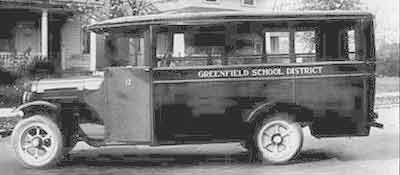
A Patterson-Greenfield bus used by the local Greenfield school district
He built bodies for trucks and buses set upon a chassis made by Ford or GM. In 1920, he changed the name of his company to Greenfield Bus Body Company.
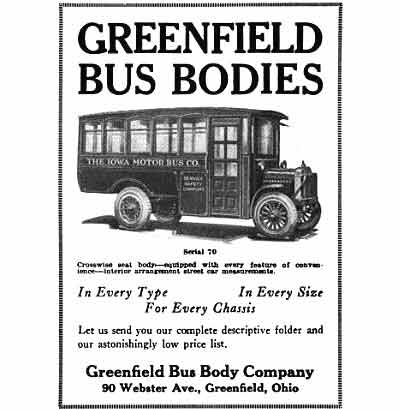
Between 1922 and 1925 advertisements and press releases for the Greenfield Bus Body Co. appeared in the nation’s commercial vehicle trade journals. Although the firm's factory was located on Washington Street, near Lafayette, the 90 Webster Ave. address refers to its shipping address, which was located across from the railroad depot on the outskirts of town.
Early advertisement of Greenfield Bus Bodies
He built strong business relationships with numerous school districts, which became steady customers.
The Crash and Great Depression had a devastating effect on his company, as widespread financial problems caused his customers to cut back on bus orders. Patterson died in 1932. His son Postell Patterson, who had worked with him, closed the business in 1939.
No Patterson-Greenfield autos are known to exist, but some of his father's C.R. Patterson & Sons Company carriages have survived.
Note: There was another unrelated Dr. Frederick Douglass Patterson born 30 years later, who became president of Tuskegee University and the found of the United Negro College Fund.
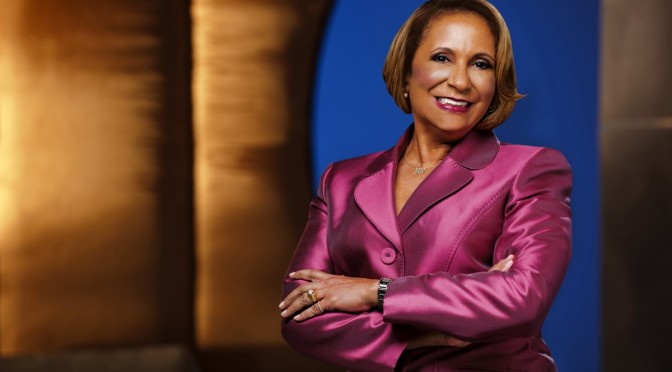
Catherine L. Hughes, more commonly known as "Cathy" Hughes is an entrepreneur, radio and television personality, and business executive.
Hughes founded the media company Radio One, and when the company went public in 1999, she became the first African-American woman to head a publicly traded corporation.
Cathy Hughes was born Catherine Elizabeth Woods on April 22, 1947, to Helen Jones Woods, a trombonist with the International Sweethearts of Rhythm, and William Alfred Woods, who was the first African-American to earn an accounting degree from Creighton University.
The family lived in the Logan Fontenelle Housing Projects while Hughes' father attended college. Hughes attended University of Nebraska-Omaha and Creighton University, her father's alma mater, but never completed her degree.
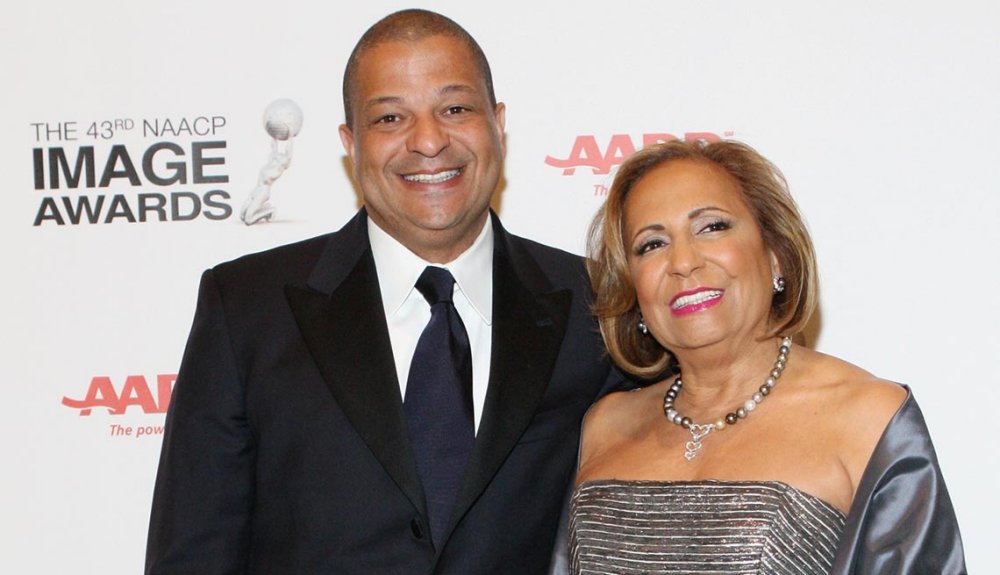
Cathy Hughes and her son Alfred Liggins III
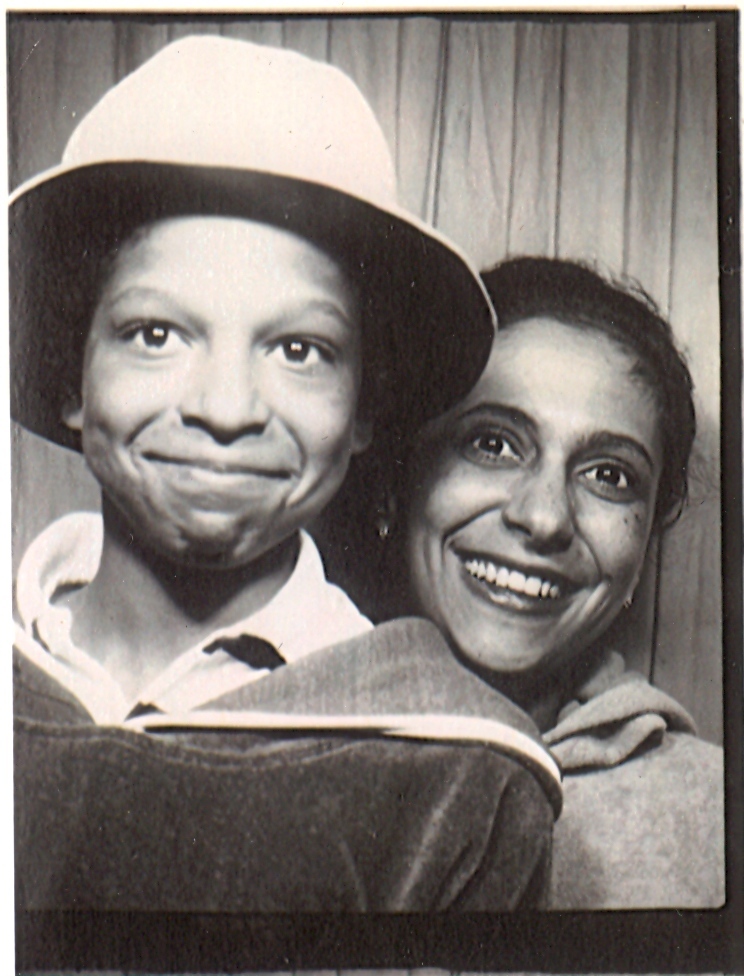
Cathy Hughes became pregnant at age 16, her friends said her life was over. Her mother kicked her out of the house. Hughes said she “was in shock.” Pregnancy “was the beginning,” Hughes said. The birth of her son, Alfred Liggins, was “an impetus to achieve,” “It was the reason I took my life seriously for the first time as a teenager and made a promise to myself, my son and God that he would not become a black statistic.”
Cathy Hughes and son Alfred C. Liggins III
In the 1970s, Hughes created the urban radio format called "The Quiet Storm" on Howard University's radio station WHUR with disc jockey and fellow Howard student Melvin Lindsay.
Before radio, in the mid-1960s, Hughes worked for an African American newspaper called the Omaha Star. Hughes began her career in 1969 at KOWH in Omaha but left for Washington, D.C. after she was offered a job as a lecturer at the School of Communications at Howard University.
In 1973, she became General Sales Manager of the university's radio station, WHUR-FM, increasing station revenue from $250,000 to $3 million in her first year. In 1975, Hughes became the first woman Vice President and General Manager of a station in the nation’s capital and created the format known as the “Quiet Storm,” which revolutionized urban radio and was aired on over 480 stations nationwide.
In 1980, Hughes founded Radio One, and with then-husband, Dewey Hughes, bought AM radio station WOL 1450 in Washington, D.C. After the previous employees had destroyed the facility,she faced financial difficulties and subsequently lost her home and moved with her young son to live at the station. Her fortunes began to change when she revamped the R&B station to a 24-hour talk radio format with the theme, “Information is Power.” Hughes served as the station's Morning Show Host for 11 years. WOL is still the most listened to talk radio station in the nation’s capital.
Cathy's son Alfred joined the company in 1985 as a salesman and by 1989 Alfred had risen to president. Cathy credits Alfred's leadership and vision as the driving force that took the company public and grew it into the media powerhouse it is today.
Radio One went on to own 70 radio stations in nine major markets in the U.S. In 1999, Radio One became a publicly traded company, listed on the NASDAQ stock exchange. As of 2007, Hughes's son, Alfred Liggins, III, serves as CEO and president of Radio One, and Hughes as chairperson. Hughes is also a minority owner of BET industries.
In January 2004, Radio One launched TV One, a national cable and satellite television network which bills itself as the "lifestyle and entertainment network for African-American adults." Hughes interviews prominent personalities, usually in the entertainment industry, for the network's talk program TV One on One.
Both Cathy Hughes and her son, Alfred Liggins have been named Entrepreneur of the Year by the company Ernst & Young. She is a notable member of Alpha Kappa Alpha sorority.
In 2015, a local business organization unofficially named the corner of 4th Street and H Street NE in Washington, D.C. “Cathy Hughes Corner”.