We’re excited to announce the release of the 3rd Edition of Legal Research for Non-Lawyers – a major 2025 update designed to make legal self-help clearer, faster, and more effective.
For years, Legal Research for Non-Lawyers has helped people across the country understand how to research the law, represent themselves in court, and protect their rights when hiring a lawyer wasn’t an option. This new edition takes things even further.
🔑 What’s New in the 3rd Edition
An entire chapter on using AI tools to speed up legal research and break down complex legal concepts.
Updated resources for 2025 with clearer guidance and practical checklists.
Expanded examples and forms to help you draft pleadings, motions, and objections.
⚖️ Why This Book Matters
Attorney fees can cost hundreds of dollars per hour, putting justice out of reach for many people. This book gives you the knowledge and tools to:
Respond effectively to lawsuits.
Fight debt collectors and predatory practices.
Research state and federal law with confidence.
Prepare for hearings, trials, and even appeals.
💡 Instant Access
The 3rd Edition is available now as a PDF download for just $19.95. 👉 Get your copy here
Don’t let the cost of legal help keep you from justice. With preparation and the right tools, you can represent yourself with confidence.
by Jean Lantz Reisz, University of Southern California
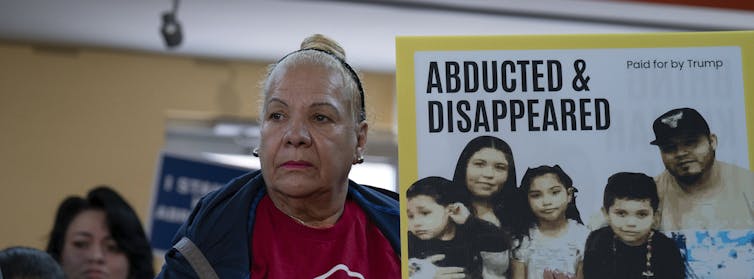
People hold signs on April 4, 2025, supporting Kilmar Abrego Garcia, who was mistakenly deported to El Salvador. AP Photo/Jose Luis Magana
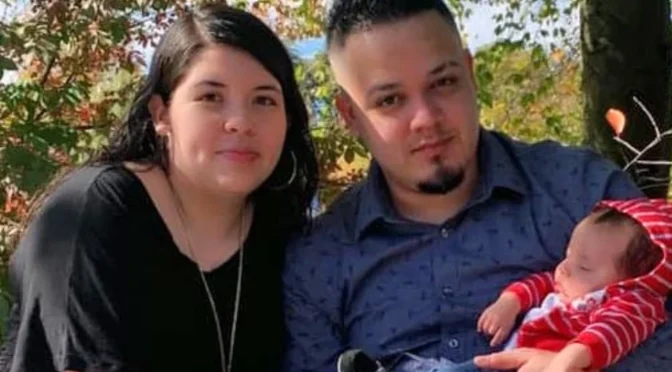
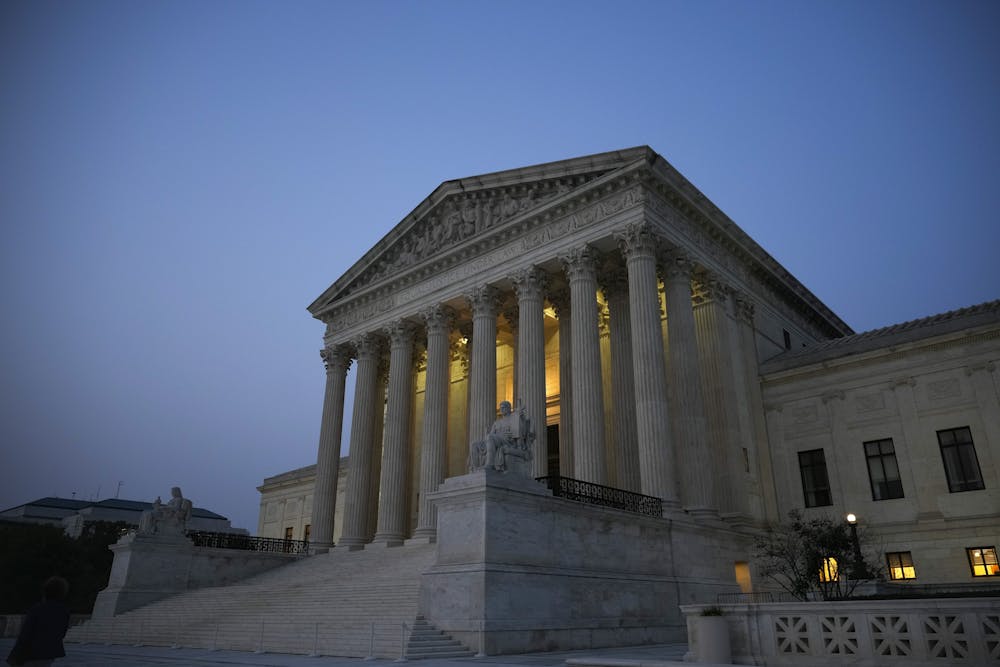
The Supreme Court on April 10, 2025, unanimously upheld the lower court order directing the Trump administration to “facilitate” the return of Kilmar Abrego García, a Maryland man who was wrongly deported to a maximum security prison in El Salvador.
The Supreme Court also directed the lower court to clarify aspects of the order.
“The order properly requires the Government to ‘facilitate’ Abrego García’s release from custody in El Salvador and to ensure that his case is handled as it would have been had he not been improperly sent to El Salvador,” the Supreme Court order states.
The Justice Department admitted to deporting Abrego García to a maximum security prison in El Salvador even though an immigration judge in 2019 ordered that he not be deported. The judge did so under an immigration law called “withholding of removal,” which is a protection, like asylum, for people facing persecution in their home country.
According to the Trump administration, such an order would be “constitutionally intolerable.” The government has compared the court order to return Abrego García to an order to “‘effectuate’ the end of the war in Ukraine or return hostages from Gaza.”
Abrego García should not have been deported
Abrego García received this protective legal status six years ago. That’s when he proved to the court he was highly likely to be persecuted by the government or gangs in El Salvador due to a specific reason, as required under immigration law.
Unlike asylum or refugee status, the status known as “withholding of removal” is not a pathway to citizenship. It allows a person to live and work in the U.S. indefinitely and not be deported to their country of nationality if they face persecution there.
That’s important, because the government failed to follow proper procedure to deport Abrego García based on gang membership. When someone is in “withholding of removal” status, the law requires the government to reopen immigration proceedings based on new evidence and seek to formally terminate the legal withholding status.
Abrego García should have been notified of the government’s desire to deport him, and he should have had the opportunity to make his case at a court hearing. His summary deportation to El Salvador likely violated his right to due process under immigration law and the Constitution.
The crux of the government’s position is that a court does not have the power to order the release of a person in a foreign prison. That would interfere with the separation of powers among the executive and judicial branches. The president has the sole power to conduct foreign relations with El Salvador, and the government has argued that ordering the return of Abrego García interferes with that power.
Prisoners watch as U.S. Secretary of Homeland Security Kristi Noem visits the Terrorist Confinement Center in Tecoluca, El Salvador, on March 26, 2025.Alex Brandon/Pool/AFP via Getty Images
The court cannot order the Salvadoran government to do anything, but it can order the U.S. government to take steps to return García Abrego if he was unlawfully arrested and deported. That’s because the judiciary has the power to determine whether the president’s actions are lawful.
The district court’s order was based on its determination that the president has likely violated immigration law and the Constitution in arresting and deporting Abrego García. The appellate court agreed.
The Supreme Court has now said the order to facilitate Abrego García’s return is proper. But the high court also said the district court judge should further clarify its order, being mindful of the president’s authority when it comes to conducting foreign relations.
Trump administration lawyers have suggested in their briefing to the Supreme Court that there could be reasons under El Salvador law for Abrego García’s imprisonment. The government has not identified any reasons and has not provided any evidence that Abrego García is charged with a crime in El Salvador, or that he is being held under Salvadoran law.
The district and appellate courts determined in this case that the U.S. is using the Salvadoran prison like any other detention facility. Under those circumstances, the U.S. government, not El Salvador, has ultimate control over Abrego García.
The Supreme Court ruled that the government should facilitate Abrego García’s return.Drew Angerer/Getty Images
In fact, other appellate courts have ordered the government to return immigrants who had been removed from the U.S. but later won their appeals of their removal orders. Those people were not in foreign prisons.
U.S. Immigration and Customs Enforcement has created a formal policy for aiding the return of immigrants who were deported while their appeals were pending and then subsequently won their appeals.
The government has argued that those situations are different. Here, it claims the court cannot demand the return of Abrego García, who is imprisoned in another country. The problem with the government’s argument is that it is the Trump administration that put Abrego García in a foreign prison.
The Trump administration has also argued that Abrego García is not entitled to return to the U.S.. It has argued that even though it was a mistake to deport him to El Salvador under his withholding of removal status, Abrego García could have been removed to another country and has no right to return to the U.S..
This would be true if Abrego García voluntarily left the U.S. or was deported to a country other than El Salvador, but that is not what happened. The government removed Abrego García to El Salvador in violation of U.S. law.
The White House’s position in this matter is troubling because the president is supposed to enforce the law, not circumvent it.
As Justice Sonia Sotomayor wrote in a separate statement published with the order and joined by Justices Elena Kagan and Ketanji Brown Jackson: “The Government’s argument, moreover, implies that it could deport and incarcerate any person, including U.S. citizens, without legal consequence, so long as it does so before a court can intervene.”
What steps the government will take to return Abrego García is unclear. The Supreme Court’s decision leaves open the question of how far the court can go to enforce his return.
Republished with permission under license from The Conversation.
by Bryna Godar, University of Wisconsin-Madison and Harry Isaiah Black, University of Wisconsin-Madison
Minnesota has elections for Supreme Court justices, who serve in this building, but the governor appoints almost every one of them instead. Dennis Macdonald/Photodisc/Getty Images
That is, if they actually get to choose who joins the court.
Our research shows that in two states with judicial elections – Georgia and Minnesota – nearly every state supreme court justice steps down midterm, allowing the governor to appoint a successor instead of the state holding an open election for a new justice. This practice can at times place the governor at odds with the voters. It is also an incentive for governors, justices and other state officials to manipulate the process of judicial selection for partisan gain.
In the founding era, all states used gubernatorial or legislative appointments to select justices.
Elected judiciaries, including in Georgia and Minnesota, largely came about in the 1800s in response to concerns about appointed judges serving the interests of the governors and legislators who appointed them instead of those of the people. Later innovations included the use of nominating commissions that recruit and vet candidates and retention elections in which voters are asked to vote “yes” or “no” in an uncontested election on whether a judge should remain in office.
Today, 21 states initially select supreme court justices through popular elections. Another 26 states select justices through appointments, all with some form of check on the appointment power – either by means of a nominating commission, a confirmation vote by another elected body, or both.
New Mexico uses a hybrid system in which the governor appoints justices who then run in partisan elections, while South Carolina and Virginia select justices via legislative elections.
Georgia’s and Minnesota’s constitutions provide for nonpartisan elections to select and retain justices. Yet in practice, justices in both states have long been selected primarily through appointment by the governor.
Since 1980, for instance, all but three of the 25 justices to join the Georgia Supreme Court were appointed rather than elected, as were all but one of the 30 justices to join the Minnesota Supreme Court. Eight of Georgia’s nine current justices were appointed, and all seven of Minnesota’s current justices were appointed.
Continuing this tradition, two Minnesota justices this year are stepping down – one voluntarily, the other due to mandatory retirement. That allows Democratic-Farmer-Labor Gov. Tim Walz to appoint their replacements. Walz’s appointees first face elections in 2026.
Once appointed, they stay
Although appointees in Minnesota and Georgia face elections for subsequent terms, in practice, they stay until they choose to leave or face mandatory retirement. No incumbent Minnesota justice has lost an election since 1946, and no incumbent Georgia justice has lost an election in the court’s nearly 180-year history.
This ability of appointees to prevail in elections is a key factor in the states’ high rates of appointments. In contrast, in states like Ohio where incumbents lose more frequently, or in the two states where appointees cannot run for subsequent terms – Louisiana and Arkansas – more justices reach the bench via elections.
In addition to appointee win rates, many complex and interrelated factors influence the rate of appointments in states with judicial elections, none of which fully explains the practice in Georgia or Minnesota.
Are these appointments a problem?
As noted, many other states initially select their justices through appointments, and some scholars and policymakers argue that appointments are a better judicial selection method than elections.
But the practice can place the governor at odds with voters. For example, in 1992, Alan Page overwhelmingly won election to the Minnesota Supreme Court, making history as the first Black justice. Yet his win came only after two governors opposed his candidacy and sought to cancel elections that would have featured Page. Page successfully overcame the second governor’s effort and became the only justice since 1967 to be elected to the state’s high court.
Another concern is that, unlike other states that require selection through appointment, both Georgia and Minnesota lack explicit checks on the governor’s interim appointment power. Neither state requires a confirmation vote for appointees. And while several governors in each state have convened nominating commissions, they are not required to appoint someone the commission recommends.
Furthermore, as scholar Stephen Ware has written, the use of a nominating commission “all or mostly appointed by the governor hardly serves as a check on the governor.”
In reality, a similar concern is present even in some states that do have explicit limits on the governor’s appointment power. In Florida, for example, the governor has consolidated power over the state’s nominating commission, reducing its effectiveness as a check.
But it is notable that today no state has intentionally adopted a system of wholly unchecked gubernatorial appointment, like the de facto systems Georgia and Minnesota have implemented. This raises the question of whether Minnesota and Georgia voters would have adopted this system in their respective constitutions had they been asked.
As state supreme courts have the last word on an increasing number of high-profile disputes, this practice of substituting elections with appointments by a governor is increasingly consequential. With heightened spending on governors’ races aimed at influencing appointments to all levels of state courts, it is unclear whether other states will follow Georgia’s and Minnesota’s lead in moving to a de facto appointment system or, conversely, if they will maintain a greater role for the voice of the people.
Republished with permission under license from The Conversation.
If Florida Gov. Ron DeSantis had his way, the word “woke” would be banished from public use and memory.
As he promised in Iowa in December 2023 during his failed presidential campaign, “We will fight the woke in education, we will fight the woke in the corporations, we will fight the woke in the halls of Congress. We will never, ever surrender to the woke mob.”
DeSantis’ war on “woke ideology” has resulted in the banning of an advanced placement class in African American studies and the elimination of diversity, equity, and inclusion programs in Florida’s universities and colleges.
Given the origins of the use of the word as a code among Black people, DeSantis has a nearly impossible task, despite his tireless efforts.
For Black people, the modern-day meaning of the word has little to do with school curriculum or political jargon and goes back to the days of Jim Crow and legal, often violent, racial segregation. Back then, the word was used as a warning to be aware of racial injustices in general and Southern white folks in particular.
In my view as a behavioral scientist who studies race, being woke was part of the unwritten vocabulary that Black people established to talk with each other in a way that outsiders could not understand.
Demonstrators march on Jan. 1, 1934, in Washington against the unjust trials of nine Black men falsely accused of raping two white women. Bettmann/Getty Images
The early days of wokeness
It’s unclear when exactly “woke” became a word of Black consciousness. Examples of its use – in various forms of the word “awake” – date back to before the Civil War in Freedom’s Journal, the nation’s first Black-owned newspaper.
In their introductory editorial on April 21, 1827, the editors wrote that their mission was to “plead our own cause.” Part of that mission was offering analysis on the state of educating enslaved Black people who were prohibited from learning how to read and write.
Because education and literacy were “of the highest importance,” the editors wrote, it was “surely time that we should awake from this lethargy of years” during enslavement.
By the turn of the 20th century, the use of versions of the word “woke” by other Black newspaper editors expanded to include the fight for Black voting rights. In a 1904 editorial in the Baltimore Afro-American, for instance, the editors urged Black people to “Wake up, wake up!” and demand full-citizenship rights.
By 1919, Black nationalist Marcus Garvey frequently used a version of the word in his speeches and newspaper, The Negro World, as a clarion call to Black people to become more socially and politically conscious: “Wake up Ethiopia! Wake up Africa!”
At around the same time, blues singers were using the word to hide protest messages in the language of love songs. On the surface, Willard “Ramblin’” Thomas laments a lost love in “Sawmill Moan”:
If I don’t go crazy, I’m sure gonna lose my mind ‘Cause I can’t sleep for dreamin’, sure can’t stay woke for cryin’
But instead of a love song, some historians have suggested that the lyrics were a veiled protest against the atrocious conditions faced by Black workers in Southern sawmills.
The song given the most credit by historians for the use of the word woke was written and performed in 1938 by Huddie Leadbetter, known as Lead Belly. He advises his listeners to “stay woke” lest they run afoul of white authority.
In an archived interview about the song “Scottsboro Boys,” Lead Belly explained how tough it was at the time for Black people in Alabama.
“It’s a hard world down there in Alabama,” Lead Belly said. “I made this little song about down there. … I advise everybody, be a little careful when they go along through there — best stay woke, keep their eyes open.”
Lead Belly explains his “stay woke” advice to Black people at the 4:30 mark.
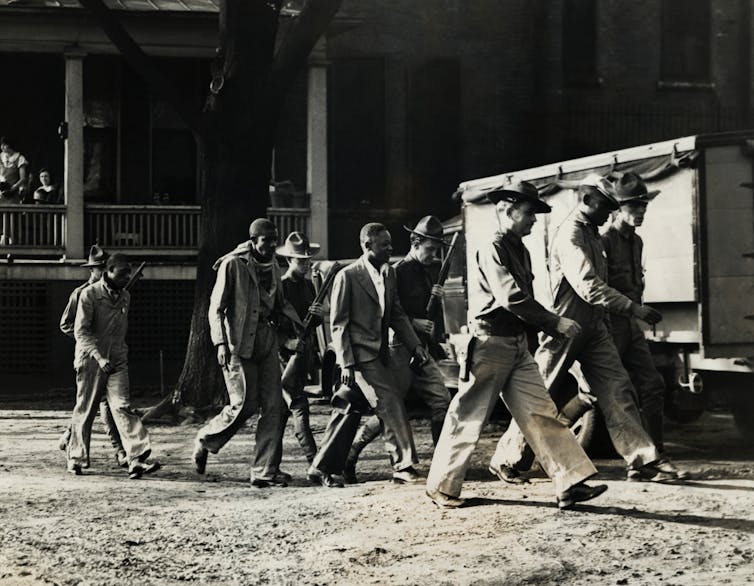
National Guard troops protect members of the Scottsboro Boys as they enter an Alabama courtroom on Jan. 1, 1932.Bettmann/GettyImages
Based on their words, the nine Black men – ages 12 to 19 years old – were immediately arrested and in less than two weeks, all were tried, convicted, and with one exception, sentenced to death.
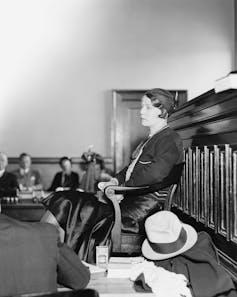
One of the alleged victims, Victoria Price, testifies on April 4, 1933, against nine young Black men in the Scottsboro case.Bettmann/GettyImages
All the cases were appealed and eventually reached the U.S. Supreme Court. In its 1932 Powell v. Alabama decision, the court overturned the verdicts in part because prosecutors excluded potential Black jurors from serving during the trial. But instead of freedom, the cases were retried – and each of the “Scottsboro Boys” was found guilty again.
There were four more trials, seven retrials and, in 1935, two landmark Supreme Court decisions – one requiring that defendants be tried by juries of their peers and the other requiring that indigent defendants receive competent counsel.
The nine young men spent a combined total of 130 years in prison. The last was released in 1950. By 2013, all were exonerated.
How woke became a four-letter word
Over the years, the memory of the Scottsboro Boys has remained a part of Black consciousness and of staying woke. During the height of the Civil Rights Movement, Martin Luther King Jr. used a version of woke during his commencement address at Oberlin College in 1965.
“The great challenge facing every individual graduating today is to remain awake through this social revolution,” he said.
In recent times, use of the word has ebbed and flowed throughout Black culture but became popular again in 2014 during the protest marches organized by Black Lives Matter in the wake of the shooting death of Michael Brown by a police officer in Ferguson, Missouri. Two years later, a documentary on the group was called “Stay Woke: The Black Lives Matter Movement.”
Florida Gov. Ron DeSantis speaks at a conservative political conference on Feb. 24, 2022, in Orlando, Fla.Joe Raedle/Getty Images
But for GOP lawmakers and conservative talk show pundits, such as DeSantis, “woke” is a pejorative word used to describe those who believe that systemic racism exists in America and remains at the heart of the nation’s racial shortcomings.
When asked to define the term in June 2023, DeSantis explained: “It’s a form of cultural Marxism. It’s about putting merit and achievement behind identity politics, and it’s basically a war on the truth.”
Desantis couldn’t be more wrong. The truth is that being aware of America’s racist past cannot be dictated by conservative politicians. Civic literacy requires an understanding of the social causes and consequences of human behavior – the very essence of being woke.
Republished with permission under license from The Conversation.
by Elizabeth C. Tippett, University of Oregon and Charlotte Alexander, Georgia State University
Imagine what a lawyer does on a given day: researching cases, drafting briefs, advising clients. While technology has been nibbling around the edges of the legal profession for some time, it’s hard to imagine those complex tasks being done by a robot.
And it is those complicated, personalized tasks that have led technologists to include lawyers in a broader category of jobs that are considered pretty safe from a future of advanced robotics and artificial intelligence.
But, as we discovered in a recent research collaboration to analyze legal briefs using a branch of artificial intelligence known as machine learning, lawyers’ jobs are a lot less safe than we thought. It turns out that you don’t need to completely automate a job to fundamentally change it. All you need to do is automate part of it.
While this may be bad news for tomorrow’s lawyers, it could be great for their future clients – particularly those who have trouble affording legal assistance.
Technology can be unpredictable
Our research project – in which we collaborated with computer scientists and linguists at MITRE, a federally funded nonprofit devoted to research and development – was not meant to be about automation. As lawprofessors, we were trying to identify the text features of successful versus unsuccessful legal briefs.
We gathered a small cache of legal briefs and judges’ opinions and processed the text for analysis.
One of the first things we learned is that it can be hard to predict which tasks are easily automated. For example, citations in a brief – such as “Brown v. Board of Education 347 U.S. 483 (1954)” – are very easy for a human to pick out and separate from the rest of the text. Not so for machine learning software, which got tripped up in the blizzard of punctuation inside and outside the citation.
It was like those “Captcha” boxes you are asked to complete on websites to prove you’re not a robot – a human can easily spot a telephone pole, but a robot will get confused by all the background noise in the image.
A tech shortcut
Once we figured out how to identify the citations, we inadvertently stumbled on a methodology to automate one of the most challenging and time-consuming aspects of legal practice: legal research.
The scientists at MITRE used a methodology called “graph analysis” to create visual networks of legal citations. The graph analysis enabled us to predict whether a brief would “win” based on how well other briefs performed when they included a particular citation.
Later, however, we realized the process could be reversed. If you were a lawyer responding to the other side’s brief, normally you would have to search laboriously for the right cases to cite using an expensive database. But our research suggested that we could build a database with software that would just tell lawyers the best cases to cite. All you would need to is feed the other side’s brief into the machine.
Now we didn’t actually construct our research-shortcut machine. We would need a mountain of lawyers’ briefs and judicial opinions to make something useful. And researchers like us do not have free access to data of that sort – even the government-run database known as PACER charges by the page.
But it does show how technology can turn any task that is extremely time-consuming for humans into one where the heavy lifting can be done at the click of a button.
Sewing machines didn’t replace seamstresses but they changed the job considerably.AP Photo/Clarence Hamm
A history of partial automation
Automating the hard parts of a job can make a big difference both for those performing the job and the consumers on the other side of the transaction.
Take for example, a hydraulic crane or a power forklift. While today people think of operating a crane as manual work, these powered machines were considered labor-saving devices when they were first introduced because they supplanted the human power involved in moving heavy objects around.
Forklifts and cranes, of course, didn’t replace people. But like automating the grind of legal research, power machines multiplied the amount of work one person could accomplish within a unit of time.
Partial automation of sewing machines in the early 20th century offers another example. By the 1910s, women working in textile mills were no longer responsible for sewing on a single machine – as you might today on a home sewing machine – but wrangling an industrial-grade machine with 12 needles sewing 4,000 stitches per minute. These machines could automatically perform all the fussy work of hemming, sewing seams and even stitching the “embroidery trimming of white underwear.” Like an airline pilot flying on autopilot, they weren’t sewing so much as monitoring the machine for problems.
Was the transition bad for workers? Maybe somewhat, but it was a boon for consumers. In 1912, women perusing the Sears mail order catalog had a choice between “drawers” with premium hand-embroidered trimming, and a much cheaper machine-embroidered option.
Likewise, automation could help reduce the cost of legal services, making it more accessible for the many individuals who can’t afford a lawyer.
Legal scholar Miriam Cherry discusses workplace automation with Elizabeth Tippett.
DIY lawyering
Indeed, in other sectors of the economy, technological developments in recent decades have enabled companies to shift work from paid workers to customers.
Touchscreen technology, for example, enabled airlines to install check-in kiosks. Similar kiosks are almost everywhere – in parking lots, gas stations, grocery stores and even fast-food restaurants.
At one level these kiosks are displacing paid labor by employees with unpaid labor by consumers. But that argument assumes that everyone could access the product or service back when it was performed by an employee.
In the context of legal services, the many consumers who can’t afford a lawyer are already forgoing their day in court altogether or handling legal claims on their own – often with bad results. If partial automation means an overwhelmed legal aid lawyer now has time to take more clients’ cases or clients can now afford to hire a lawyer, everyone will be better off.
In addition, tech-enabled legal services can help consumers do a better job of representing themselves. For example, the federal district court in Missouri now offers a platform to help individuals filing for bankruptcy prepare their forms – either on their own or with a free 30-minute meeting with a lawyer. Because the platform provides a head start, both the lawyer and consumer can make better use of the 30-minute time slot.
More help for consumers may be on the way – there is a bumper crop of tech startups jostling to automate various types of legal work. So while our research-shortcut machine hasn’t been built, powerful tools like it may not be far off.
And the lawyers themselves? Like factory and textile workers armed with new power tools, they may be expected to do more work in the time they have. But it should be less of a grind. It might even free them up to meet with clients.
Republished with permission under license from The Conversation.
As unemployment benefits, eviction moratoriums and other pandemic related safety nets expire, millions of people will find themselves in legal situations they are unprepared to handle. When my legal issues started after my 2011 jobloss, my legal research skills became some of my most valuable assets. Court.rchp.com exist in part because just about every other self represented person I saw in court lost cases they should have won, just as I won most of my cases in court.
If you know you're at risk for adverse legal action, don't wait before it's too late, start educating yourself now! Court.rchp.com contains a wealth of free self-help legal information that you can use to begin more knowledgable about the law.
by Lauren Sudeall, Georgia State University and Darcy Meals, Georgia State University
Judge Richard A. Posner, a legendary judicial figure, retired abruptly in 2017 to make a point: People without lawyers are mistreated in the American legal system.
In one of his final opinions as a judge on the United States Court of Appeals for the Seventh Circuit, he expressed frustration at the dismissal of one self-represented litigant’s lawsuit, writing that the prisoner, Michael Davis, “needs help – needs it bad – needs a lawyer desperately.”
Unfortunately, Davis’s circumstances are far from unique. Many lower-income people have no lawyer to help them navigate the legal system, either in civil or criminal cases.
Eighty percent of state criminal defendants cannot afford to pay for a lawyer, and only those who are actually incarcerated are constitutionally entitled to appointed counsel. Many people facing misdemeanor charges can, if convicted, be subjected to significant fines and fees, or face the loss of benefits (including housing) or deportation. Yet, they have no right to an attorney, and those who cannot afford a lawyer will go without one.
Unlike in the criminal context, there’s no federal constitutional right to counsel in civil cases. Civil cases can involve a range of critical issues, including housing, public benefits, child custody and domestic violence. And while some civil litigants may be entitled to counsel in certain jurisdictions, in most of these cases, people who cannot afford a lawyer will be forced to go it alone. Doing so may mean that they fail to make it through the process, have their case dismissed or lose what otherwise would have been a winning case.
As directors of the Center for Access to Justice at Georgia State University College of Law, we agree with Judge Posner. People like Michael Davis desperately need help. Without legal assistance, their issues will likely be unresolved or, worse, wrongly resolved against them.
In some states, as many as 80 to 90 percent of litigants are unrepresented, even though their opponent has a lawyer. The number of these “pro se litigants” has risen substantially in the last decade, due in part to the economic downturn and the relationship between poor economic conditions and issues like housing and domestic relations.
The Legal Services Corporation, the single largest funder of civil legal aid for low-income Americans in the nation, reported in June that 86 percent of low-income Americans receive inadequate or no professional legal help for the civil legal problems they face. Here in Georgia, state courts heard more than 800,000 cases involving self-represented litigants in 2016 alone.
In some types of cases, not having counsel can make a dramatic difference. Take the example of low-income tenants facing eviction. Across the county, roughly 90 percent of landlords are represented by counsel, while 90 percent of tenants are not. Simply having a lawyer increases the odds of being able to stay in one’s home. When tenants represent themselves in New York City, they are evicted in nearly 50 percent of cases. With a lawyer, they win 90 percent of the time.
Navigating the system
Why is having a lawyer so important? The reality is that even the most mundane legal matters can require dozens of steps and complex maneuvering.
In one study, researchers identified almost 200 discrete tasks that self-represented litigants must perform in civil cases – from finding the right court to interpreting the law, filing motions, compiling evidence and negotiating a settlement. Some of these tasks require specialized knowledge of the law and of the court system. Almost all require time away from work and caring for children. Many also require the ability to get to the courthouse, to read and to speak English or access a translator.
The Access to Justice Lab at Harvard Law School has also tracked how labyrinthine the justice system can be. Just starting a routine process – like establishing a legal guardian for a minor – can take many steps, and even these can vary in unexpected ways, given the natural variation among judges and the particulars of a specific case.
Regardless of the type of case, missing just one step could mean you have to start the process all over again or even cause the case to be dismissed, sometimes without the option to refile.
People often quip that there are far too many lawyers. Yet the reality is that, while there are a lot of lawyers in certain geographic areas and certain specialties, in many rural areas – sometimes referred to as “legal deserts” – there are actually far too few lawyers.
Our center recently published a map of Georgia’s legal deserts. In our state, there are five counties without any lawyers at all and another 59 with 10 lawyers or fewer.
To make matters worse, in many of those counties, public transportation and internet access are sparse, and a significant percentage of the population doesn’t even have access to a vehicle.
The Self-Represented Litigation Network, a nonprofit focused on reforming the system to help those representing themselves, has also used mapping tools to depict how access to the justice system can vary across the country and sometimes even within the same state.
Immigrant Children
One of the most shocking aspects of ou systems is that under US law, children arrested for illegally entering the country don’t have the right to demand a court-appointed lawyer or interpreter. The video below, "UNACCOMPANIED: Alone in America", demonstrates how heartless our legal system can be.
Changing the statistics
So, what do we do about the fact that the legal system is, for many people without a lawyer, nearly impossible to navigate? We believe that it will take a variety of different approaches to solve this issue.
In Washington, nonlawyers can be trained and licensed to offer legal support to those unable to afford the services of an attorney.
Still others, like Self-Represented Litigation Network founder Richard Zorza, emphasize simplification of legal processes, including changing or eliminating the procedural and evidentiary rules that make the process so difficult. For example, the Tennessee Supreme Court has approved plain-language forms and instructions, written at a fifth- to eighth-grade reading level, for use in uncontested divorces between parties with minor children.
Maybe it’s a matter of increasing available self-help resources or placing the onus on the courts and requiring judges to play a more active role in solving the problem.
Which approach is best? It may depend on the case – and an effective solution will include a combination of the above. Some cases will require nothing less than full-service representation by a lawyer, while in other contexts, streamlined procedures and simpler forms may be sufficient for pro se litigants to get a fair shake.
Whatever the solution, the problem is clear: Self-represented litigants’ grievances are real and, for too many, justice is out of reach.
Republished with permission under license from The Conversation. NOTE: The Immigrant Children segment was added by Randall Hill and was not apart of the original article.
by Carol Marbin Miller and Daniel Chang, Miami Herald
ORLANDO, Florida — On the day Reggie Jacques was born, doctors at Winnie Palmer Hospital in Orlando told his parents that there was no hope, that his brain had gone too long without oxygen during his difficult birth. But Reggie refused to die.
On his sixth day, said parents Jean and Ruth Jacques, doctors urged them to remove Reggie from his ventilator. They said he would surely stop breathing. The couple agreed a month later. But Reggie wouldn’t die.
Around day 60, doctors asked the couple to sign a “do not resuscitate” order. They declined. And Reggie still refused to die.
For 95 days, Reginald Jacques refused to die.
But on the 96th day, Sept. 19, 2016, something felt wrong. Ruth Jacques surrendered to an irresistible impulse to hold her son after a day’s work for an Orange County social services agency. “I was driving the car like a madwoman,” Jacques said of her early evening trip to the hospital.
Jacques flew through red lights. Uncharacteristically, she left her car in a parking space for disabled drivers. She ran up three flights of stairs to the Neonatal Intensive Care Unit, where, she said, Reggie’s monitor was beeping, and he appeared to be in distress.
She picked up her infant son from his bassinet — all tubes and bandages and chirping monitors — and placed him gently on her chest. “With the little strength he had left, he lifted up his head and looked back at me,” she said.
“One minute later, his heart stopped. It was more like our heart stopped.”
Four years later, Ruth Jacques’ heart beats for two as she wages a campaign to demand answers from the doctor who delivered her son. She believes Florida’s state-sponsored Birth-Related Neurological Injury Compensation Association, or NICA, robbed her of the right to seek justice through the courts for the harm he suffered at birth and three months of agony as he fought for life.
Florida lawmakers created NICA in 1988, responding to obstetricians’ complaints that their malpractice insurance premiums were too high. The law bars parents like Jean and Ruth Jacques from pursuing lawsuits against doctors and hospitals when a baby is born with catastrophic, even fatal, brain damage from oxygen deprivation or asphyxia during childbirth.
Ruth and Jean Jacques filed a complaint with the Florida Department of Health about the doctor who delivered their son Reggie. They said they received a form letter back saying the doctor’s actions did not violate the profession’s “standard of care.” Credit:Photo courtesy of Jacques family
If the birth injury meets NICA criteria, even in cases where the doctor or hospital may have made a glaring error, parents typically have little choice but to forgo a lawsuit and accept the program’s compensation, which consists of a $100,000 settlement upfront, and “medically necessary” and “reasonable” health care for the duration of the child’s life.
If the child dies, there is an added $10,000 funeral benefit.
The Jacqueses hoped to sue their obstetrician and hospital for negligence, only to learn from their attorney of the law that created NICA. Stripped of that right, they settled for filing a malpractice complaint with the Health Department. They received a form letter saying their complaint had been dismissed because the doctor’s actions did not violate the profession’s “standard of care.” There was no further explanation. Ruth Jacques said neither she nor her husband was interviewed by investigators.
The Jacqueses cannot appeal the investigation’s outcome, or even read about it, beyond the form letter. In Florida, those records are sealed and available only to the doctor.
That wasn’t the state’s only betrayal, Ruth Jacques said.
The day after Reggie’s death, overcome by anger and despair, she did the only thing she could think of: She printed leaflets warning prospective patients to stay away from Dr. Ricardo Lopez, the obstetrician who delivered Reggie. She said she handed them out in front of his Orlando medical office — and distributed a few to patients in his waiting room.
“I felt like the world was shutting me up,” she said. “I wanted to be heard.”
Ruth Jacques said she was silenced again. She learned that Lopez was free to do what she could not: file a lawsuit. Her attorney told her if she persisted in protesting she might end up a defendant.
A lawyer for Orlando Health, which owns Winnie Palmer and employs Lopez, wrote to the Jacqueses’ lawyer in January 2017: “I respectfully demand that Ms. [Jacques] cease and desist from further attacks on Dr. Lopez and [the hospital] regarding this matter.” Then the couple’s lawyer wrote to Ruth Jacques.
“I understand your anger,” the lawyer explained in an email. But, she added, “Any kind of verbal attack or public complaint about Dr. Lopez or Orlando Health could lead them to sue you and your husband personally.”
Lopez, who did not sue, declined to respond to the Miami Herald’s requests for an interview, forwarding the inquiry to Orlando Health.
Alayna Curry, an Orlando Health spokeswoman, said the hospital would not discuss Reggie’s calamitous birth, even though his mother has.
“Our medical team respects the wishes of our patients when it comes to their delivery experience,” she said in a prepared statement. “When a medical emergency arises during a delivery, time is of the essence and our physicians will speak with the patient about the recommended course of action.”
“You Better Push”
There is sharp disagreement over precisely what was said and when inside the delivery room.
Ruth Jacques provided the Herald a copy of her medical records, which contain a notation from Lopez that, based on “severe” fetal heart recordings, “a C-section was offered.”
“The patient refused,” Lopez wrote.
A nurse also reported “Pt refused C-section” in a notation dated two days after Reggie was delivered.
Jacques said she did no such thing, and the records do not contain a signed form from the mother refusing a C-section. The form is considered an industry “best practice,” but not a requirement.
In a 2017 letter to the state Health Department, Ruth Jacques said she insisted that Lopez never told her Reggie’s life was in danger.
“You better push, or you’re going to have a C-section,” she said she was told by the doctor. “In my understanding, he is threatening me [with] a C-section if I don’t push, not that the situation … was an emergency.”
Ruth Jacques did continue pushing, according to her medical records. Lopez attempted to deliver Reggie using a vacuum device, which popped off the infant’s head three times before the fourth pull succeeded.
Dr. Nicole Smith, medical director of maternal fetal medicine practice at Brigham and Women’s Hospital, Harvard Medical School’s teaching hospital in Boston, said in general the responsibility lies with doctors to explain their rationale and the benefits and risks of continuing in labor or moving to a surgical delivery.
“Mothers maintain the right to decline a C-section,” Smith said in an email, “but it is the provider’s responsibility to ensure that they understand the risks and benefits to the extent possible in what is typically a highly stressful situation.”
Smith did not review Ruth Jacques’ case or comment on the delivery.
Ethical guidelines of the American College of Obstetricians and Gynecologists also place the onus on the obstetrician to provide the patient with “adequate, accurate and understandable information.”
The group advises, however, that even a signed form does not guarantee that the ethical obligations of informed consent have been met.
Reggie’s parents believe their son would have lived had Lopez initiated a timely C-section, potentially preventing Reggie’s brain from being starved of oxygen. But they will never really know.
Like many NICA families, the Jacqueses said they had no idea that they had lost their right to file suit.
Ruth Jacques said she signed forms acknowledging that her doctor and the hospital had informed her of NICA before Reggie’s birth. But she didn’t read them. She said her OB-GYN had her sign them on her first appointment. At the hospital, the forms were tucked inside a stack of documents handed to her when she showed up in labor, distracted by impending motherhood, too late to change her mind and seek out another hospital.
After they lost Reggie and learned that a lawsuit was foreclosed, the couple said their sorrow would turn to outrage when they discovered that Lopez had a history with NICA.
Aside from Reggie’s case, the doctor has been named in four NICA claims, including two petitions filed prior to Reggie’s death. Not every NICA claim is accepted for compensation. But one of the first two lodged against Lopez was.
Two other claims were submitted after Reggie died. Those two were rejected because the newborns weighed less than 5.5 pounds — the legal threshold to qualify for NICA, a requirement intended to eliminate very premature babies from eligibility. In the case of a rejected claim, the family can sue. But none of the rejected claims has been followed by a lawsuit.
Being named in a petition does not mean a doctor committed malpractice — even if the claim is compensated. It only means that the case meets the narrow criteria of the no-fault program.
Bonded by Sorrow
If NICA families are members of an unenviable fraternity, families whose child died are its saddest chapter.
A total of 1,238 NICA claims have been made from the inception of the program through the beginning of April. NICA said at least 440 of those were accepted for coverage, which includes at least 143 from parents whose child had died by the time the claim was accepted.
Another 50 children whose claims were accepted for compensation died after they entered the program, NICA said in an email. Among those 50, the average life span after acceptance was 8.2 years. The oldest lived 29 more years. The youngest survived one day after the claim was accepted.
For some parents, NICA cannot provide what they want most: accountability.
There are practical considerations, said David Studdert, a Stanford University professor and expert in health law who co-authored a study of NICA in 2000.
Some of those families who were accepted into NICA likely would have gotten nothing had they been allowed to pursue a lawsuit.
But there is catharsis in discovering what went wrong, who is responsible — even in just being heard — said Kenneth Feinberg, a lawyer who has designed and administered compensation funds in the wake of some of America’s worst tragedies: the Virginia Tech massacre, the Sandy Hook Elementary shooting, the rampage at Pulse nightclub, Sept. 11.
The fund established after the Sept. 11 attacks was entirely voluntary, and 97% of eligible claimants opted to take the money, Feinberg said, forfeiting the right to sue. The program had an unusual feature: Claimants could appear before Feinberg or a staff member behind closed doors to express their grief; 1,500 did.
“All kinds of people came to vent, angry, not at the federal government. Angry at God,” Feinberg said.
Feinberg said many described the program as an exercise in justice, but he saw it differently. “I don’t think those words have much meaning when you’ve lost a loved one,” he said. “The best word I use is mercy.”
Reggie Never Cried
Jean Jacques’ father died in March 2015, on the same day the couple returned from their Caribbean honeymoon cruise, leaving them despondent and Jean Jacques as the lone male heir. They decided they wanted to become parents right away. They were hoping for a boy, someone to carry forward Jean Jacques’ father’s last name and legacy.
They found a house suitable for raising kids. Ruth Jacques’ family threw a baby shower. They painted the walls of Reggie’s nursery teal and gray, bought a brown crib and attached stickers of giraffes, lions and zebras to the walls.
On the morning of June 14, 2016, Ruth Jacques went to see her obstetrician for a regularly scheduled appointment. She said there was no indication that Reggie was ready for delivery. She drove to work at the social services agency where she was a neighborhood coordinator.
But the next morning, she woke up with a fever and tremors, so she went to Orlando Health Winnie Palmer Hospital for Women & Babies. There, her water broke, and she went into labor. Lopez had not been her obstetrician previously but was there for childbirth.
To Ruth Jacques’ ears, Lopez was accusing her of failing to adequately push what she later learned was a 10-pound baby.
When Reggie finally was born, he was essentially lifeless. His first two Apgar scores — measures of his vitality, on a scale of one to 10 — were zero and zero. He required four doses of epinephrine to start his heart.
Jean Jacques and Reggie. Credit:Photo courtesy of Jacques family
“Normal babies, when they are born, they cry, they open their eyes,” said Jean Jacques, an Orange County Schools paraprofessional and full-time student at the University of Central Florida. Reggie did not cry.
He was placed on a ventilator — which doctors would recommend unplugging six days later, Ruth Jacques said. Bereft of answers, Ruth and Jean Jacques asked for a meeting.
It took place a week after Reggie’s birth, in a conference room near the intensive care unit, with a U-shaped wooden table. Ruth Jacques’ father, sisters, aunt and the family’s pastor joined the couple. She recalls a hospital lawyer standing against a wall opposite her and Lopez sitting at the head of the table, his arms folded across his chest. He didn’t look at her, she said. The doctor barely spoke.
What happened? she asked. Why was her baby on a ventilator with little to no hope of survival?
“He looked at me in the eye, and he said: ‘You did not want to have a C-section,’” Ruth Jacques said.
“And I said to him: ‘So, are you implying that I killed my baby?’”
Ruth Jacques said the doctor unfolded his arms and wrapped one under his cheek. He didn’t answer.
When the meeting adjourned, Ruth said, she met separately with a Winnie Palmer neurologist. “I was informed that my child would ‘never walk, talk or ever be able to do anything for himself. He would live in a vegetative state.’ ”
At first, the couple resisted removing life support. “We were praying that God would help,” she said.
But the strain became unbearable, the couple said. They said one doctor told them: “If you really believe in God, why would you do that to your child?” The family relented.
“That was the hardest decision for us to make,” Jean Jacques said.
Ruth and Jean Jacques and extended family members gathered round the newborn as a musician played soft and somber notes on a guitar. Someone recorded Reggie’s heartbeat on a disc and handed it to his father. A doctor shut off the ventilator, then pulled the breathing tube from Reggie’s mouth and throat, the parents said.
Reggie gulped for air. His mother covered her ears to muffle the sound of his gasping. Jean Jacques paced the floor. The couple fixated on Reggie’s heart monitor and the clock just above it. It seemed like hours, they said. And then, unexpectedly, Reggie began to breathe on his own.
His Finest Outfit
Reggie lived another two months. He never left the hospital.
He wore his finest dress-up clothes only once — the day his parents buried him.
He was laid to rest inside an impossibly small white coffin, dressed in a short-sleeved, buttoned-down shirt and a tie that was too big for his slender body. The tie and shirt were both white, the color of purity.
The couple buried Reggie far from their home, at Greenwood Cemetery. They didn’t want Ruth Jacques visiting her son daily. She needed time to heal.
But a year after her son’s death, Ruth Jacques took a job as a grants coordinator with Orange County’s government downtown, which is near Greenwood, a historic cemetery. Her son’s graveyard is visible from her office. The boy who lived 96 days was laid to rest near Orlandoans whose full lives gave them prominence, including a U.S. senator and two mayors.
Jean and Ruth Jacques preserved Reggie’s short life in pictures: His arms and legs stretched out like a wooden puppet from the contractures — a shortening and hardening of muscles and tendons — that brain damage wrought. An oxygen tube extended from his nostrils. In one photo, he appears to be looking directly at the camera, though the doctors had said he was incapable of such purpose.
Ruth Jacques found direction in her son’s death, vowing not to let the same thing happen to other parents.
She took to her keyboard, writing to state lawmakers. And to the Florida Justice Association, a group of lawyers who represent litigants like her. Her email to the trial lawyers recounted Reggie’s birth and death in detail. It covered seven pages and said Reggie “will always be a memory of a scar that will never truly heal.” There was no response, she said.
She wants Lopez to remember, as well. And so, she said, every year on Reggie’s birthday — and on the anniversary of his death — she files a new complaint with the Department of Health. It’s a symbolic act, but she wants to remind the doctor that Reggie lived, and that he died.
“He is going on with his life, while we the families are stuck on yesterday.”
Jean and Ruth Jacques, now 35 and 32, live in a modest home in Orlando. They’re raising the little brother Reggie never got to know, 3-year-old Raphael. Another child, Reynaud, was born on Jan. 15. The money she received from NICA will never replace the loss, Ruth Jacques said.
“That’s blood money,” she said. “It’s not going to bring him back.”
Every year on the anniversary of her son’s death, Ruth Jacques files a new complaint with the Florida Department of Health, she said. It is a symbolic gesture. The department has already dismissed the complaint. Credit:Photo courtesy of Jacques family
Republish with permission under license from ProPublica.
Running on progressive platforms that include ending mass incarceration and addressing police misconduct, candidates defeated traditional “law-and-order” prosecutors across the country.
Elected prosecutors – often called state’s attorneys or district attorneys – represent the people of a particular county in their criminal cases. Their offices work with law enforcement to investigate and try cases, determine which crimes should be prioritized and decide how punitive to be.
After decades of incumbent prosecutors winning reelection based on their high conviction rates or the long sentences they achieved, advocates for criminal justice reform began making inroads into their territory a few years ago. They did so mainly by drawing attention to local races and funding progressive challengers.
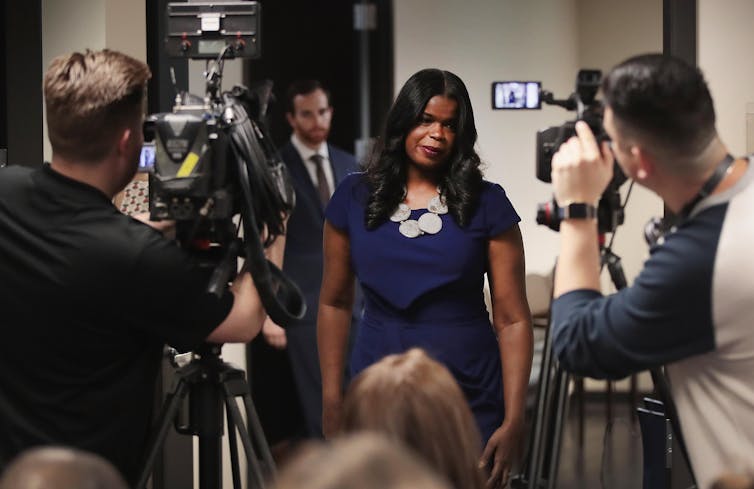
Despite criticism during her first term, progressive prosecutor Kim Foxx won reelection as Cook County state’s attorney by a 14-point margin. Scott Olson/Getty Images
Birth of a movement
During her 2016 run for state’s attorney for Cook County, Illinois, Kim Foxx vowed to bring more accountability to police shootings and reduce prosecutions for nonviolent crimes.
She won, becoming the first Black woman to serve as state’s attorney in Chicago. It was also the first high-profile sign that this progressive prosecutorial approach was working.
Her victory was followed by the 2017 election of Larry Krasner as district attorney in Philadelphia. Krasner, a former civil rights attorney, had never prosecuted a case when he ran for office – a move that the city’s police union chief called “hilarious.”
But Krasner’s campaign platform – addressing mass incarceration and police misconduct – responded to a city saddled with the highest incarceration rate among large U.S. cities, nearly seven out of every 1,000 citizens. Krasner won with 75% of the vote.
As a criminal procedure professor and a former federal prosecutor, I have watched the desire for reform only grow since then.
Black Lives Matter protests have also focused attention on how prosecutors make decisions – whom they prosecute and how severely, particularly in police violence cases.
In Detroit, Karen McDonald won her race for Oakland County prosecutor by promising “common-sense criminal justice reform that utilizes treatment courts and diversion programs, addresses racial disparity, and creates a fair system for all people.”
“I think people are starting to realize, ‘Why don’t I know who my DA is?‘” said Gordon McLaughlin, the new district attorney for Colorado’s Eighth Judicial District, who campaigned on alternatives to incarceration for nonviolent offenders. “It’s brought criminal justice into the main conversation.”
Police accountability
One prominent issue on voters’ minds is how prosecutors’ offices choose to handle police violence.
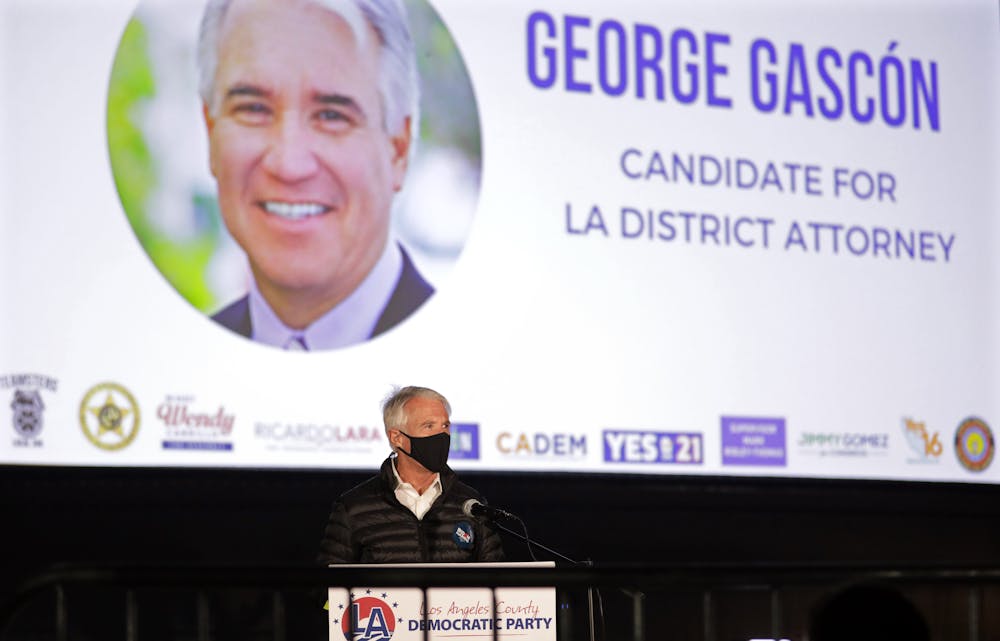
George Gascón, candidate for Los Angeles district attorney, speaks during a drive-in election night watch party at the LA Zoo parking lot on Tuesday, Nov. 3, 2020.Myung J. Chun/Los Angeles Times via Getty Images
Gascón vowed to hold police accountable for officer-involved shootings. During the campaign, he pledged to reopen high-profile cases, including two where people were shot for not complying with an officer’s directions.
Mass incarceration and cash bail
Progressive prosecutors are likely to have the most impact by diverting people away from the criminal justice system in the first place.
Many have been motivated by what they see as “the criminalization of poverty” – a phenomenon in which the poor compile criminal records for minor offenses because they cannot afford bail or effective legal counsel.
Alonzo Payne, the new district attorney for San Luis Valley, Colorado, was outraged that poor people were forced to stay in jail because they couldn’t afford to post bond.
“I decided I wanted to bring some human compassion to the DA’s office,” he told the Denver Post.
Reforming the cash bail system and reducing mass incarceration is a goal shared by all of the newly elected prosecutors this election cycle, including Jose Garza, an immigrant rights attorney, in Austin, Texas.
Looking ahead
It seems that progressive policies are here to stay in some of the nation’s largest cities, but reformers didn’t enjoy success everywhere.
Candidates Zack Thomas in Johnson County, Kansas, and Julie Gunnigle in Maricopa County, Arizona, lost their races. And incumbents withstood reformist challengers in Cincinnati, Ohio, and Charleston, South Carolina.
Nonetheless, progressive prosecutors are increasingly winning races – and staying in power – by using the criminal justice system in more equitable ways.
Worrell, in Orlando, is a good example. She ran the Conviction Integrity Unit in the district attorney’s office, investigating innocence claims from convicted defendants.
Her reform message resonated a lot more with voters than the message of her opponent, Jose Torroella, who pledged to be “more old-fashioned” and more “strict.” Worrell won the race with nearly 66% of the votes.
“Criminal justice reform is not something people should be afraid of,” Worrell said. “It means we’re going to be smart on crime, rather than tough on crime.”
Republished with permission under license from The Conversation.
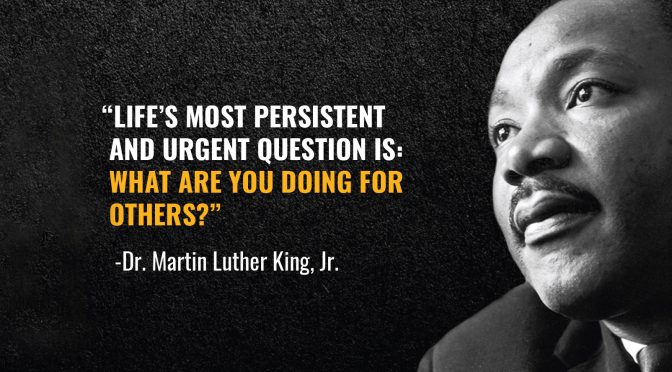
I can't think of a more fitting tribute on Dr. Martin Luther King Day than the example being demonstrated by Kimberly Gardner! Just like King, Gardner dares to dream big. Just like King, Gardner's statements are being distorted, her actions vilified and forces have mobilized to discredit her.
Most people can't imagine the sacrifice required to fight a powerful system. Systems are created to protect the self-interest, wealth and power of those who create them. As we predicted three years ago, the system is fighting against Ms. Gardner's reform efforts. System benefactors especially powerful ones will do whatever is required to protect themselves. This is true of virtually all systems, banking, education, political, labor and legal.
Fortunately, systems are not perfect, so there are ways to penetrate systems to create unintended consequences and use them to our advantage. From its inception, the United States was designed to exclude black people from benefiting, however, the Fourteenth Amendment was an unintended consequence.
St. Louis Circuit Attorney Kimberly Gardner is the lastest impossible dreamer and she is using the Fourteenth Amendment in her fight against a corrupt system. She challenged a governor, a racist police department and the justice system and those with self-interest involving our continued oppression are fighting back. Ms. Garner earns more than $167,000 as circuit attorney and could have easily gone along with the status quo, however, she put not only her position and salary on the line to fight for us, but her life as well.
Below is an inspirational video that I'm dedicating to Kimberly Gardner: "The Impossible Dream" sung by Luther Vandross. Some dreams, while being highly desirable seem unattainable or impossible, but even seemingly impossible situations have been overcome by dedicated and determined people.
Kimberly Gardner, the first black St. Louis Circuit Attorney filed a civil rights lawsuit in St. Louis Federal Court, case number 4:20-cv00060, on Monday, January 13, 2020, alleging a racist conspiracy to prevent her from doing her job. Below is a video from CBS morning news the morning after the lawsuit was filed
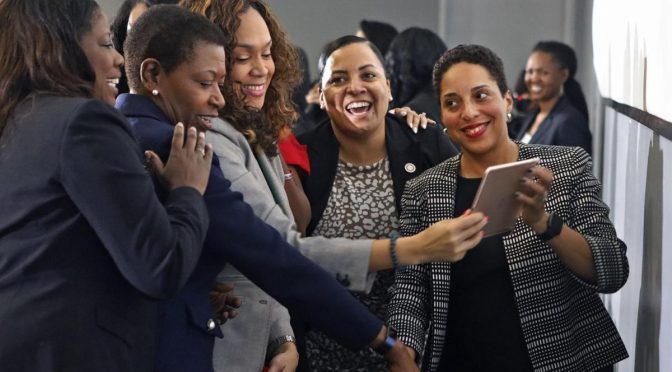
On Tuesday, January 14, 2020, black female prosecutors from around the country came to St. Louis in a show of solidarity to support Ms. Gardner. It was a wonderous sight to behold these women standing in support of their fellow freedom fighters. Below is the video of that rally.
The Ethical Society of Police, who did not endorse Gardner when she ran for office, stated: "That lawsuit is legitimate because there is a climate in the St. Louis Metropolitan Police Department… that is accepting of racism, discrimination, corruption. And some of those entities are within the St. Louis Police Officers Association."
King's dream has not been fully realized, but we are much closer to that dream than we were when he announced it to the world. Unfortunately, the dream has lost some ground in the Trump era, however, that does not mean the dream is unattainable. We must each do our part to make that dream a reality. Oppression is a form of injustice that occurs when one social group is subordinated while another is privileged. Oppression is maintained by a variety of different mechanisms, however, in the United States, the law has by far been the single most effective perpetrator of oppression. Laws allowing slavery, peonage, unequal education, substandard housing, mass incarceration, and a variety of other social injustices helped shaped current reality.
Unlike Kimberly Gardner, when you or I go against the system, we don't have others rallying behind us. Each of us individually must arm ourselves with as much knowledge as possible. Waiting on organizations or others to do for us what we can do for ourselves will most certainly delay the dream. As Ella Baker stated, "strong people don't need strong leaders". Obama's stepfather gave the following advice; “Better to be strong,' he [Lolo] said … 'if you can't be strong, be clever and make peace with someone who's strong. But always better to be strong yourself.”
When I first began representing myself in court with no formal legal training, my friends and family thought my quest was an impossible dream until I started winning! Over a period of several years, I made dozens of court appearances and I did not witness another self-represented person win. Most lost because they lacked the most basic understanding of the rules of court. The legal profession, which restricted the number of African Americans entering its ranks, creates barriers to finding and understanding legal information and resources.
Court.rchp.com reveals what the legal profession seeks to hide and provides free legal information and resources. We also reveal many of the lies of history that were taught to use in organized misinformation and miseducation campaign. Make yourself stronger by increasing your knowledge of the law. Once you've done so, the next time a landlord, business, or institution treats you unfairly you'll be better equipped to respond properly and fight back if necessary. Often, a simple letter quoting a federal or state statute and how it applies to the situation gets the desired result.
When your adversary believes you are uninformed they are more likely to continue abusing your rights. Once you put someone on notice that you understand the law and how to apply, they are less likely to mistreat you and risk a legal challenge.
A study of bail judges in the Miami and Philadelphia areas suggests that both black and white judges show bias against black defendants.
The study, in The Quarterly Journal of Economics, finds that black defendants are 2.4 percentage points more likely than white defendants to be detained while they await their court hearings. The average bail for black defendants is $7,281 higher than for white defendants.
It appears that bail judges rely on racial stereotypes to predict which defendants will commit another crime if released, the researchers explain. In reality, some white defendants are much more likely than black defendants to get arrested again after their release, the team’s analysis suggests.
“We find suggestive evidence that this racial bias is driven by bail judges relying on inaccurate stereotypes that exaggerate the relative danger of releasing black defendants,” write the authors of the paper, David Arnold and Will Dobbie of Princeton University and Crystal S. Yang of Harvard Law School.
Generally speaking, after an arrest, defendants who seem less risky are released on their own recognizance, meaning they are free to go after promising to appear in court for upcoming proceedings, or they are released if they meet certain conditions such as paying a bail amount or posting a bail bond to guarantee their presence in court. Some defendants are not released because they cannot meet bail.
For the study, researchers examined 162,836 court cases representing 93,914 defendants in Philadelphia County from 2010 to 2014 as well as 93,417 cases from 65,944 defendants in Miami-Dade County between 2006 and 2014.
The findings are consistent with another study published in 2018 that uses machine learning techniques to show that bail judges make mistakes in predicting what a defendant would do if released. That study indicates judges make significant prediction errors for defendants of all races.
Some other key findings of this study include:
Racial bias is higher among bail judges in Miami-Dade than in Philadelphia.
Racial bias is higher among inexperienced judges and part-time bail judges. Experienced judges are better at predicting defendant behavior. The scholars find that judges in Miami who are considered to be experienced have 9.5 years of experience working in the bail system, on average. Miami judges considered to be inexperienced have an average of 2.5 years of experience.
“If racially biased prediction errors among inexperienced judges are an important driver of black-white disparities in pretrial detention, providing judges with increased opportunities for training or on-the-job feedback could play an important role in decreasing racial disparities in the criminal justice system,” the researchers write. “Our findings also suggest that providing judges with data-based risk assessments may also help decrease unwarranted racial disparities.”